
Last updated November 22, 2026
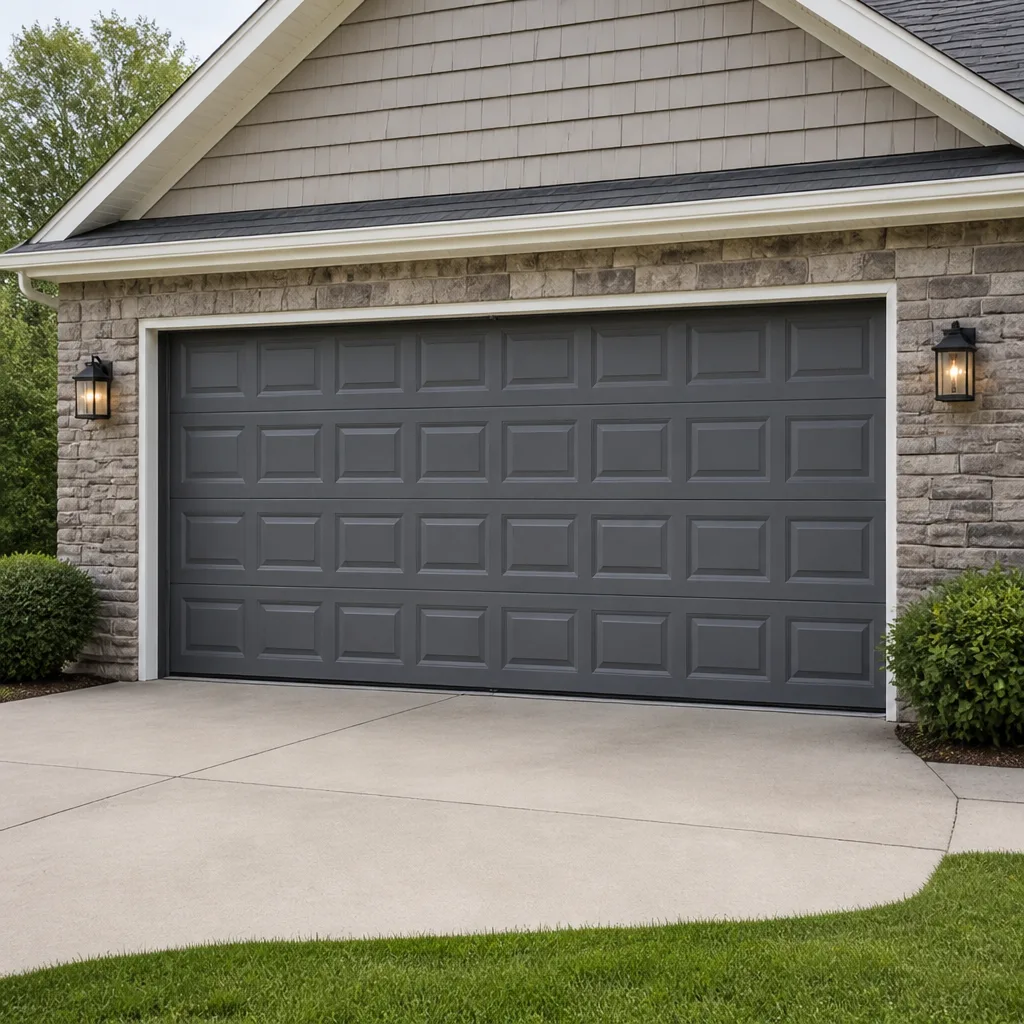 Raised-panel steel
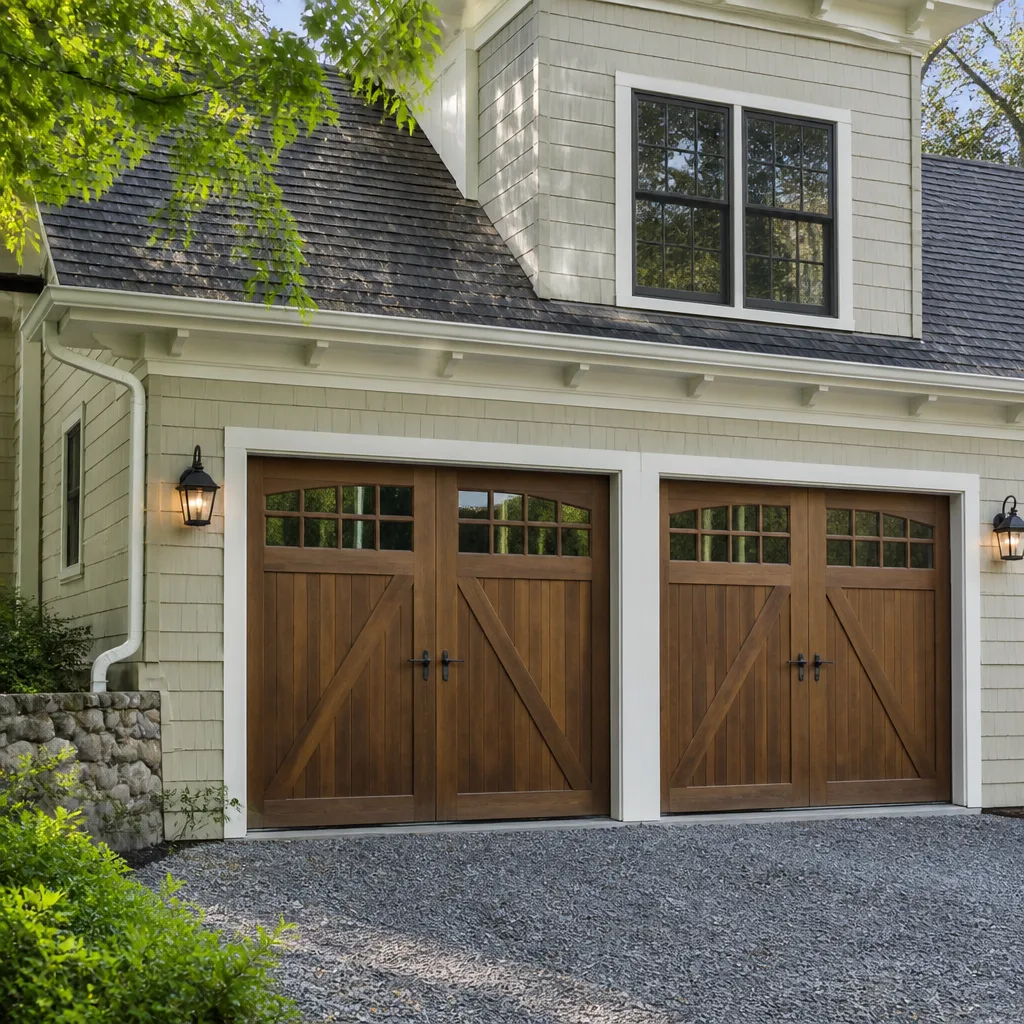 Carriage house
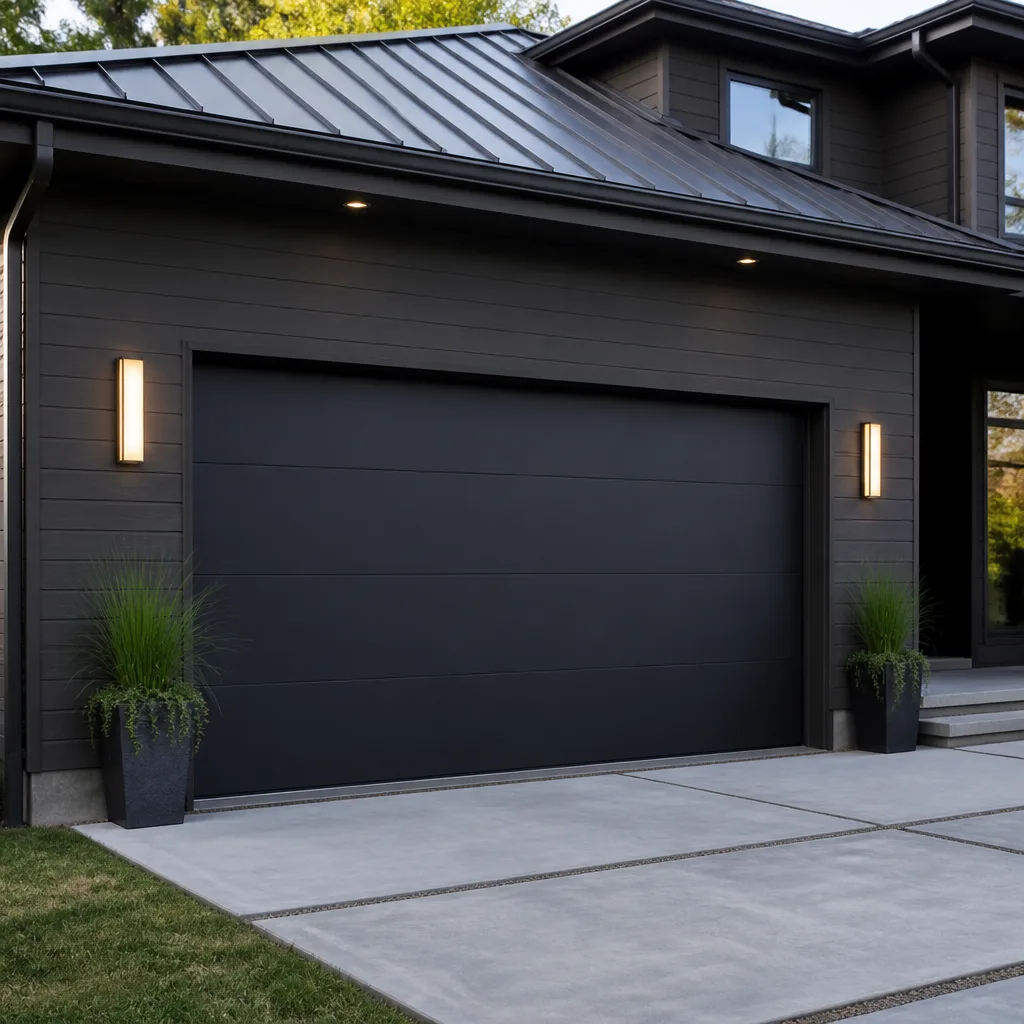 Modern flush
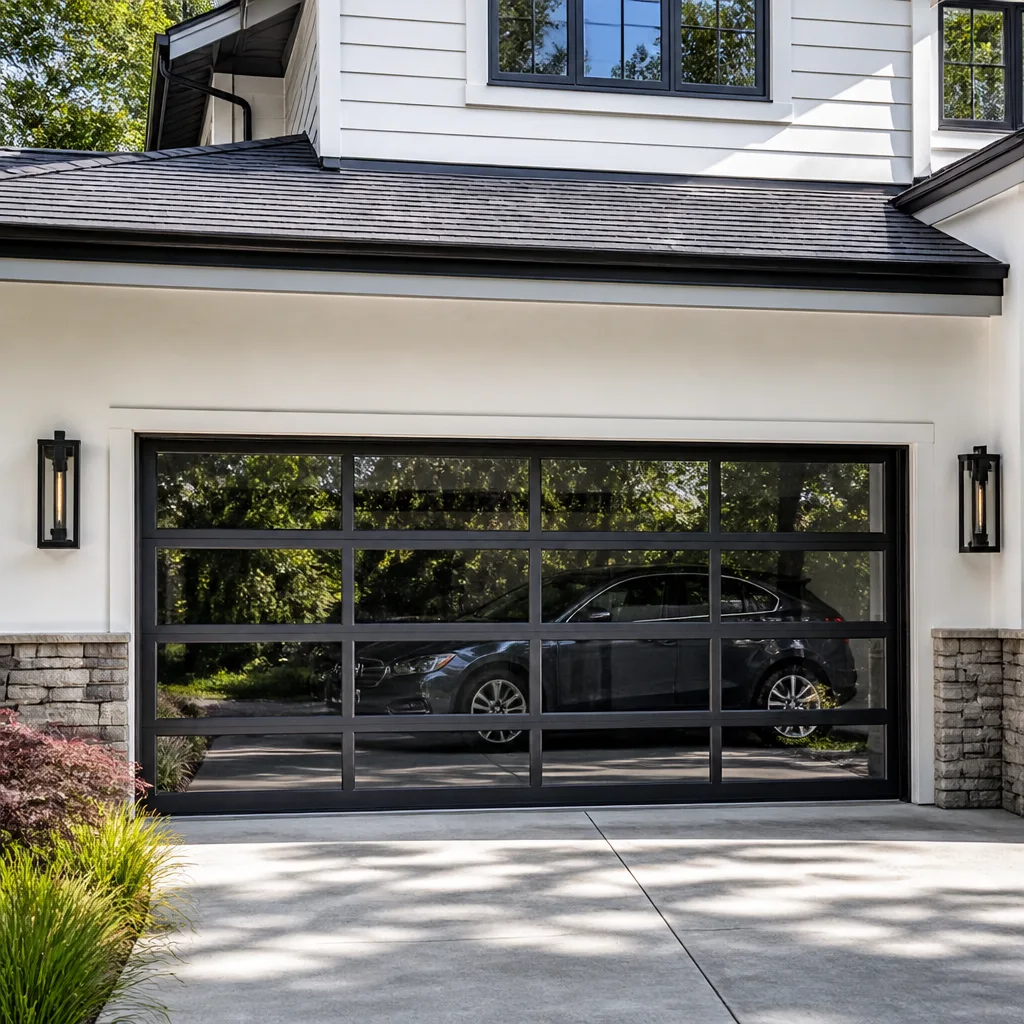 Full-view glass
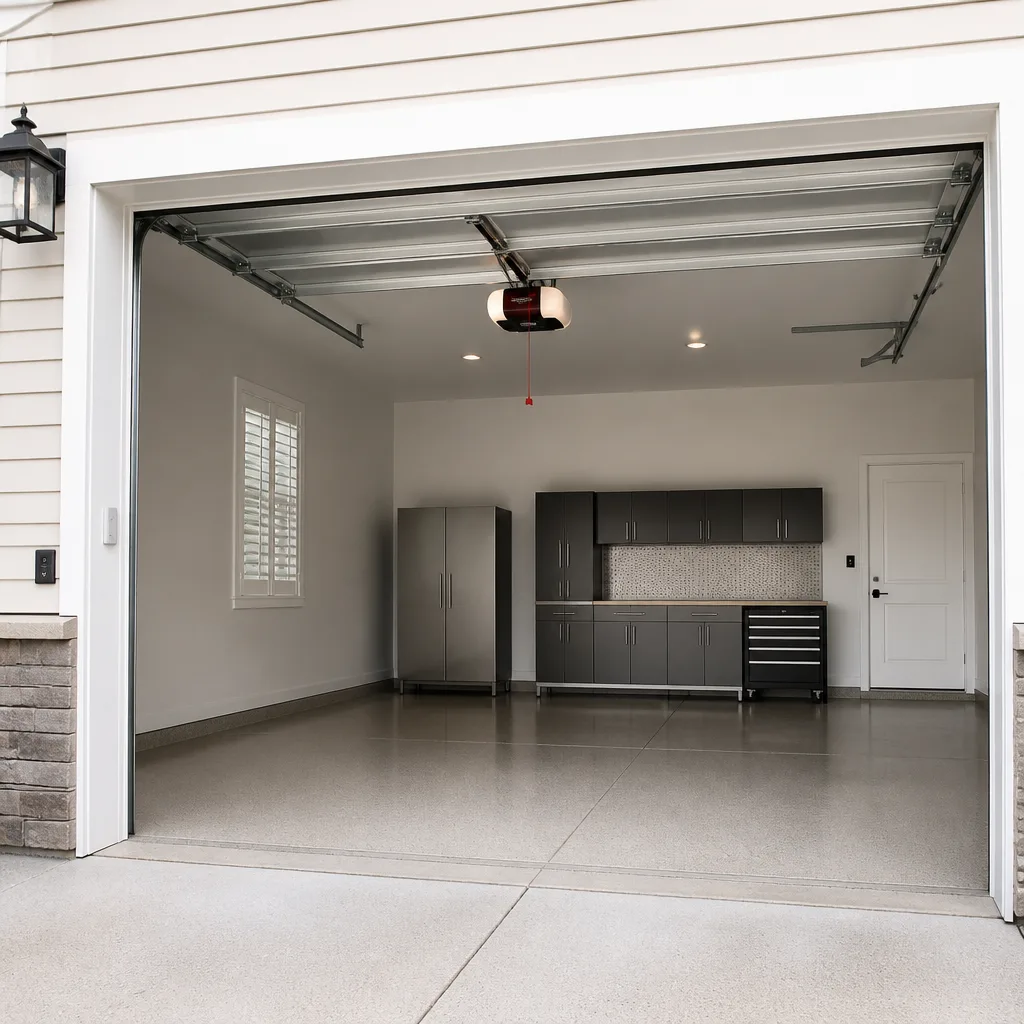 LiftMaster openers
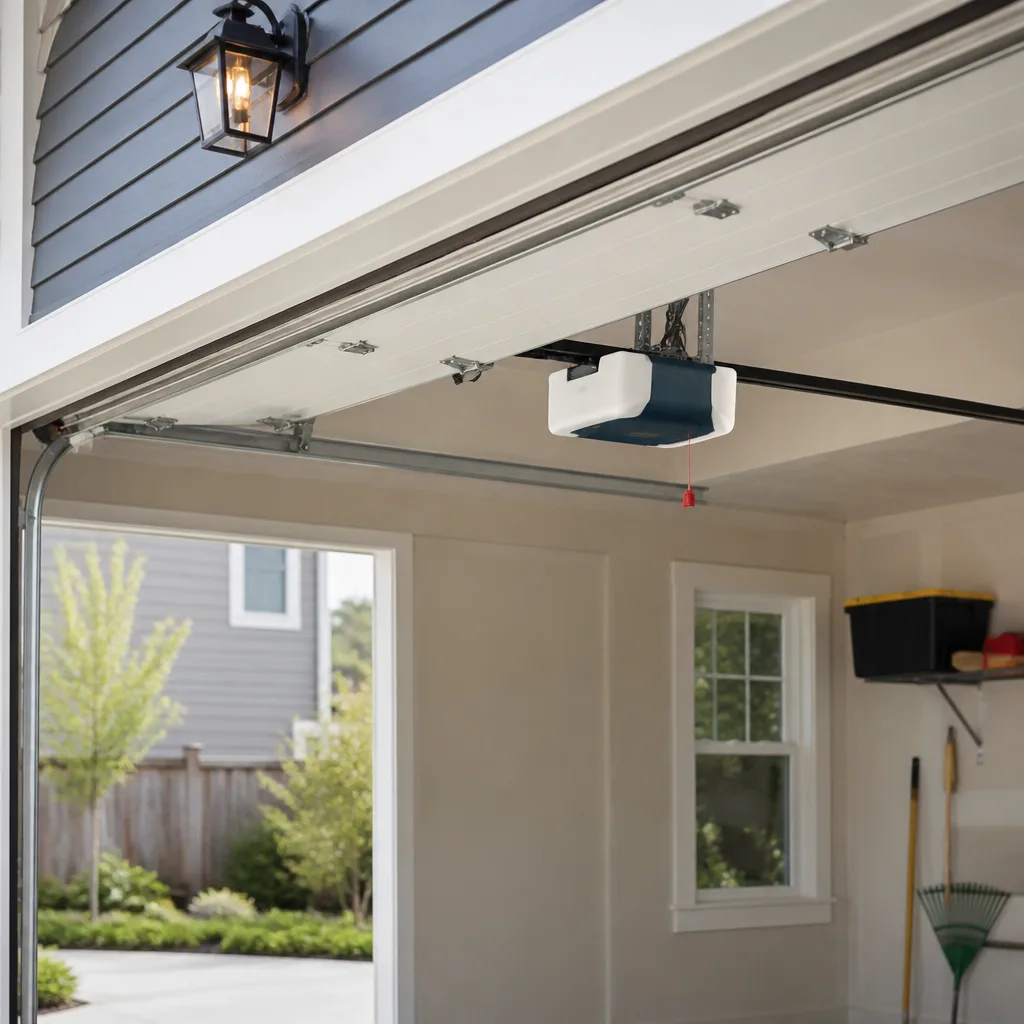 Chamberlain openers
Full 25-point door and opener safety check with every visit - springs, cables, rollers, tracks, and your LiftMaster or Chamberlain opener included
You get a price before we start. It does not change when the pro arrives.
Get your free estimateHow to Hire a Garage Door Contractor in Ormond Beach: A Step-by-Step Guide
Search for garage door repair in Ormond Beach and the first page you get back is a strange mix. Some of those results belong to companies that actually do the work. Others belong to call centers in another state that collect your request, sell it to whichever local operator bids lowest, and never touch a torsion spring themselves. The frustrating part is that the two look identical on a screen. Both have a phone number, both promise fast service, and both use the same words. What separates them isn’t visible until someone is standing in your driveway, and by then you’ve already lost the leverage to ask hard questions. This guide walks you through the screening that happens before that point: what license to look for, what questions expose a lead broker, how to read a quote, and what Florida requires when a door gets replaced. By the end you’ll know exactly how to hire a garage door contractor in Ormond Beach without gambling on a phone number.
Quick Answer
Hire a garage door contractor in Ormond Beach by verifying three things before anyone arrives: the Florida license (Specialty Structure – Garage Doors) on the DBPR website, a real Volusia County business presence rather than an out-of-state call center, and a written quote given only after a visual inspection. Ask about Florida Product Approval numbers if the door is being replaced, and confirm the technician handles spring work specifically. A legitimate contractor will answer all of it without hesitation and put the price in writing before starting.
Styles & brands we work with
- Raised-panel steel
- Carriage house
- Modern flush
- Full-view glass
- LiftMaster openers
- Chamberlain openers
Table of Contents
- How Do You Spot a Lead-Gen Service vs. a Real Local Contractor?
- What License Does a Garage Door Contractor Need in Florida?
- What Are the Red Flags Unique to the Garage Door Industry?
- Why Do General Handymen and Big-Box Installers Fall Short on Spring Work?
- What Are Florida Product Approval Numbers and Why Do They Matter?
- How Should You Structure a Written Quote for Garage Door Work?
- What Should Happen During the On-Site Inspection?
- How Does the Ormond Beach Climate Affect Garage Door Wear?
How Do You Spot a Lead-Gen Service vs. a Real Local Contractor?
You spot a lead-generation service by looking for the absence of local detail. Real contractors have to talk about specific things: which streets they work, what neighborhoods they cover, the kind of houses they see. Lead brokers can’t, because they don’t know.
The lead-gen model works like this: a homeowner searches, fills out a form or calls a toll-free number, and the request gets sold. Whoever pays or bids for it gets the job. The dispatcher has no garage door knowledge. They can’t discuss a LiftMaster opener logic board, they won’t know what a bottom bracket is, and they can’t tell you whether the door on your house takes a standard or high-lift track setup. That lack of knowledge shows up in the first three minutes of a phone call if you listen for it.
Here’s what to check before you dial:
- Look for a Volusia County address. Not a P.O. box, not a suite number in Tampa, not “serving Ormond Beach and surrounding areas” with no street listed. A contractor who works here will say where they’re based.
- Read the service page carefully. Does it mention garage doors and nothing else? A specialist writes about springs, openers, tracks, panels and installation because those are their entire vocabulary. A broker writes about “home services” and rotates between plumbing, roofing and garage doors on the same site.
- Call and ask a technical question. Ask what kind of spring your door likely has based on its age and how it opens. A real technician will describe torsion versus extension without breaking stride. A call center will route you to someone else.
- Watch for the “we’ll match any quote” line. Brokers say this because they haven’t seen your door and can’t price it. A specialist won’t quote sight unseen.
- Test the follow-up. A contractor with a local operation answers a follow-up call by the same team. A broker hands you to a new dispatcher every time.
None of this is about size. A one-truck operation can be completely legitimate and often is. The question is whether the person on the phone is accountable for the work that shows up at your house. If your request moves through a middleman before it reaches a technician, the accountability gets thinned out, and warranty conversations get ugly later.
What License Does a Garage Door Contractor Need in Florida?
Garage door installation and repair in Florida falls under a specialty contractor license in the Specialty Structure category, bearing Garage Doors in its scope. This is not a general contractor license and it is not a handyman exemption. It’s a specific credential for specific work, and it’s verifiable.
The license comes from the Florida Department of Business and Professional Regulation, commonly called DBPR. The state maintains a public license lookup that anyone can use. It takes about two minutes if you know the name of the business or the individual license holder.
- Go to the DBPR license verification portal.
- Search by the business name or the individual’s name, not by what the website claims.
- Confirm the license type reads Specialty Structure and the status reads Current/Active.
- Check the expiration date.
- Note the license number and write it on your quote for reference.
What you’re screening for is simple. If the person who shows up can’t produce a license number, or the number comes back as a different trade, or the status is null and void, stop. Unlicensed garage door work is a real problem in this trade because the barriers to entry look low to someone who doesn’t know better. A general handyman can swing a hammer. That does not mean they should be handling a torsion spring wound to several hundred pounds of torque.
One other thing to check: the local pro is licensed and insured as their state requires. Ask for a certificate of insurance and read the dates. If the business can’t provide one, the license doesn’t cover you if something goes wrong on your property.
For Ormond Beach homeowners, the licensing step is the single most important part of this process. Everything else in this guide depends on it. If the license checks out, the rest becomes about scope and price. If it doesn’t, nothing else matters.
What Are the Red Flags Unique to the Garage Door Industry?
The garage door trade has its own set of warning signs because the work itself has specific quirks: high system tension, brand-specific equipment, and a high replacement cost that attracts bad actors. What looks like a warning sign in another trade is often a normal part of the process here, and vice versa. Learning the difference saves a lot of trouble.
Watch for these:
- No physical address in Volusia County. A real local business has a place where mail goes. If the address on the website is a suite in another state or a generalized “Central Florida” region, the odds are you’re talking to a lead broker.
- A price quoted before anyone looks at the door. Garage doors don’t price well over the phone. A torsion versus extension setup, a door’s weight, the number of panels that need replacing, track condition – all of that changes the number. Anyone who quotes a firm figure before seeing your door is either guessing or setting you up for an “adjustment” once they arrive.
- Pressure to decide same-day. A real contractor gives you a written quote and lets you sit on it. If the person on the phone pushes you to lock in a price today because “it changes tomorrow,” that’s a sales tactic, not a service.
- No questions about the brand of your equipment. Anyone who works on LiftMaster, Chamberlain, Genie, Clopay, Amarr, Wayne Dalton, Craftsman or Raynor systems will ask what you have before sending someone out. Brand matters for parts, for opener compatibility and for diagnosis. If the dispatcher doesn’t care, they aren’t the one doing the work.
- Cash-only payment requests. Legitimate businesses take cards and checks and issue receipts.
- No written quote at all. Verbal pricing is the industry’s biggest source of disputes. If they won’t put it in writing, walk away.
- Vague warranties. Ask exactly what’s covered, for how long, and by whom. If the warranty depends on the lead broker rather than the contractor doing the work, it’s not a real warranty.
One caveat on this list: urgency itself isn’t a red flag. If your door won’t close, that’s a security and safety problem and you need help fast. Emergency availability is a legitimate offering, and it’s fine to call on it. The red flag is pressure to commit and pay same-day, not the call itself.
Why Do General Handymen and Big-Box Installers Fall Short on Spring Work?
Spring replacement is the part of garage door work that separates specialists from everyone else. A torsion spring under load is a large stored-energy component. It’s wound to hundreds of pounds of torque and held in place by two set screws and a winding cone. Getting it wrong doesn’t just cause a sagging door. It causes injury. That reality is why we treat spring work as an explicit specialty rather than a side job.
On our side of the trade, that means garage door spring repair is a core offering, not a sidebar. But the reason it matters for hiring is what it tells you about a contractor’s limits. Three business models have trouble here:
- General handymen. A handyman license in Florida doesn’t cover garage door spring work. The training isn’t there, the tooling for winding cones isn’t there, and the liability exposure for the homeowner is significant. If something goes wrong, your homeowner’s insurance may not cover the resulting damage because the work was outside the contractor’s scope.
- Big-box installers. The retail store sells doors. The installation gets subcontracted to whoever is on the rotation that week. When a spring fails a year later, you’re talking to a customer service line in a building somewhere, and the technician on the label of your original invoice is gone. Accountability ends at the parking lot.
- Multi-trade jack-of-all-services companies. Windows, doors, gutters, sometimes roofs. Garage door work is one item on a long menu, and the technicians rotate between categories. That’s not a knock on any individual in the truck. It’s a structural fact: someone handling a torsion spring once a month will not catch the things someone handling them daily catches.
Specialists don’t carry that problem because they can’t. A single-trade business only survives if it does garage door work well. The learning curve is paid for by the contractor, not the customer.
One more thing about big-box model gaps: warranty claims. When the installer is a subcontractor, the warranty process relies on the retailer coordinating with a subcontractor network that may not exist in six months. When a contractor does the work directly, the warranty conversation is with the business that’s accountable for the quality of the job. Ask before you sign.
What Are Florida Product Approval Numbers and Why Do They Matter?
A Florida Product Approval number is an identifier issued for products that meet the state’s building code requirements, and garage doors used in Florida construction are subject to it. If you’re replacing a door, that number should appear on the documentation. A legitimate contractor will know this without looking it up.
Here’s what the process involves and why it’s worth understanding:
- The product carries a Florida Product Approval number tied to the specific door model, glass configuration and design pressure rating.
- The number is listed in the state’s approval database, which the homeowner can look up independently.
- The approval number appears on the door labeling and the manufacturer’s documentation.
- The contractor should be able to match your installation to the correct approval for your house.
This matters because a garage door is a large opening on your house. Under the building code, the door has to perform to specific wind-load and impact requirements that depend on where the home sits. A door rated for a lighter condition won’t perform like one rated for a heavier one, and the approval number is how you know which is which.
Ask directly during the quote: “What’s the Florida Product Approval number for this door, and can you show me the documentation?” If the contractor knows the answer immediately and can point to the paperwork, that’s a good sign. If they don’t know what you’re asking, that’s a red flag. It means the work may not get permitted properly, and the resulting installation may fail inspection.
We work on the brand you already have, and when a replacement door is on the table, brands like Amarr and Wayne Dalton publish their approval documentation clearly. So does Raynor. Craftsman, Clopay, LiftMaster, Chamberlain and Genie equipment carries its own documentation on the opener and door side. Good contractors keep those documents close because they get asked for them.
For a permit check, your city’s building department is the source. Ask them what’s required for a garage door replacement on a home in Ormond Beach. Most cities require a permit for this kind of work, so the question is a legitimate one and shouldn’t embarrass anyone. The answer is also public record, so you can confirm whatever the contractor told you.
How Should You Structure a Written Quote for Garage Door Work?
A written quote should list line items, not one big number. The reason is simple: a total price tells you nothing about what you’re comparing. Two quotes for $900 can mean entirely different things. One covers a spring replacement and a bearing plate. The other covers a spring replacement and nothing else, and the bearing plate gets discovered mid-job.
Structure your quote comparison around these line items:
| Line item | What it should specify |
|---|---|
| Labor | What work is being done, itemized by component |
| Parts | Brand and model of each part, spring gauge, opener model if applicable |
| Spring count | Whether the quote is for one spring or a matched pair (they’re usually replaced as a pair) |
| Door model (for replacement) | Model number, Florida Product Approval number, color |
| Permit | Whether a permit is included and who pulls it |
| Warranty | What’s covered, for how long, and by whom |
| Disposal | Whether haul-away of the old door or parts is included |
| Total | A line that says “this is the price” |
Two things must be explicit on every quote. First, the written estimate sets the final price. If a component turns out to be worse once the door is opened up, the contractor should stop and re-quote before doing the work, not surprise you with a larger bill. Second, the price is quoted and agreed before any work starts. Say that out loud on the call and get it confirmed.
Spring pricing deserves special attention. Spring replacement is often quoted for one spring, and a matched pair costs about twice that. If your quote shows a single spring number and your door has two, ask whether the pair is being replaced together. The answer matters both for the price and for how long the door will stay balanced.
If the spring is what’s failing, the local pro should also be able to talk through garage door opener repair at the same visit, since a failing spring and a struggling opener present similar symptoms from inside the house. Ask the same quote to cover the opener diagnosis if there’s any doubt.
What Should Happen During the On-Site Inspection?
The on-site inspection is where a contractor earns trust or loses it, and you can evaluate it in about twenty minutes. What you’re watching for is thoroughness. A thorough inspection of a garage door takes time because there are many moving parts and the failure points aren’t all obvious from the driver’s seat of a car.
Here’s what a proper inspection covers:
- Balance test. The door gets disconnected from the opener and opened by hand halfway. If it doesn’t stay put, the spring is out of adjustment or failing.
- Spring examination. Torsion springs on the header above the door, extension springs along the tracks. Look for gaps in the coil, rust, or the extension spring safety cables.
- Track and roller condition. Bent tracks, worn rollers, loose hinges.
- Cable inspection. Fraying, kinks, or contact with anything sharp.
- Panel inspection. Dents, cracks, moisture damage, or hinge separation.
- Bottom bracket and weather seal. The part most exposed to outdoor conditions.
- Opener test. The unit runs through a full open and close, and the reversing mechanism is checked.
- Photo eye test. The safety sensors on both sides of the door get tested for alignment and response.
- Force settings check. The opener’s force limit is checked to ensure it will reverse on an obstruction.
If a contractor arrives, glances at the door, and quotes a number in five minutes, the inspection didn’t happen. That’s not a repair person; that’s a sales visit. Ask them to run the balance test and show you what they see. A real technician will do this without being asked.
Parts you may be quoted for on a spring job include the spring itself, winding cones, bearing plates, and sometimes a center bracket. Those extra parts aren’t upselling; they’re the pieces that fail shortly after the spring if they aren’t replaced. Ask why each part is on the quote. A specialist will explain without hesitation. If they can’t, that’s your sign.
How Does the Ormond Beach Climate Affect Garage Door Wear?
Ormond Beach runs warm and humid for most of the year, and that pattern affects garage doors in ways a homeowner may not notice until something fails. The humidity is the main factor. Summer air holds a lot of moisture, and garages sit at the intersection of indoor and outdoor, so they see some of both.
What that means in practice:
- Steel panels show corrosion earlier here than in drier climates, especially along the bottom edge where water sits and along any scratch or dent that exposes bare metal. Bottom seal condition matters more than owners realize.
- Wood doors take on moisture. The lower panels are closest to the garage slab and see the most humidity. Paint and sealant need to stay intact.
- Lubrication schedules shift. Rollers, hinges and tracks benefit from routine lubrication here, and the interval is shorter than in drier climates because heat and humidity both accelerate wear.
- Openers work harder. A hot garage puts more stress on opener motors during peak summer, and the thermal protection built into many units will cut a motor off on a very hot afternoon. A door that runs heavy compounds the problem.
- Storms drive water in. Florida’s summer storms are intense, and a garage door whose bottom seal is compromised lets water into the garage where the frame and slab will take it.
None of this is cause for alarm, and none of it changes what a garage door does. It simply means a maintenance rhythm matters here. A door that gets a yearly look-over tends to go longer before something breaks, and the parts that need attention first are usually the seal, the rollers, and the spring tension.
For homeowners in Ormond Beach, the biggest practical benefit is finding a contractor who knows the pattern. When the technician walks out in July and says the bottom panel is showing rust because the seal failed, that’s not a guess. That’s a working hypothesis formed from doing this work in this climate. If the first professional you call diagnoses the door without mentioning the local weather, ask why. You’ll find out a lot about their experience in about thirty seconds.
Common Mistakes to Avoid
- Calling the first number on the search page. The top sponsored result is often a lead broker, not a local contractor. Take the extra minute to check the business address and license before dialing.
- Accepting a phone quote. Garage doors don’t price without inspection. Anyone who gives a firm number over the phone hasn’t seen the door, the track, or the spring, and the number will change once they do.
- Comparing totals instead of line items. A lower total often means fewer parts included. Compare the two quotes line by line to find out what’s missing, then ask.
- Forgetting the Florida Product Approval number on a replacement. If the new door doesn’t have the correct approval for your home, the job may fail inspection or need rework. Ask for the number and write it down.
- Skipping the DBPR license check. It takes two minutes and screens out unlicensed work that leaves you with no recourse. Do it before the truck pulls into the driveway.
- Letting a general handyman touch the springs. Springs are the single most dangerous component of any garage door system. This is not work that outside trades should take on.
- Choosing on price alone. The cheapest quote often skips the parts that fail next, or relies on a subcontractor relationship with no warranty behind it. Choose on scope and accountability, then use price to break ties.
See the difference
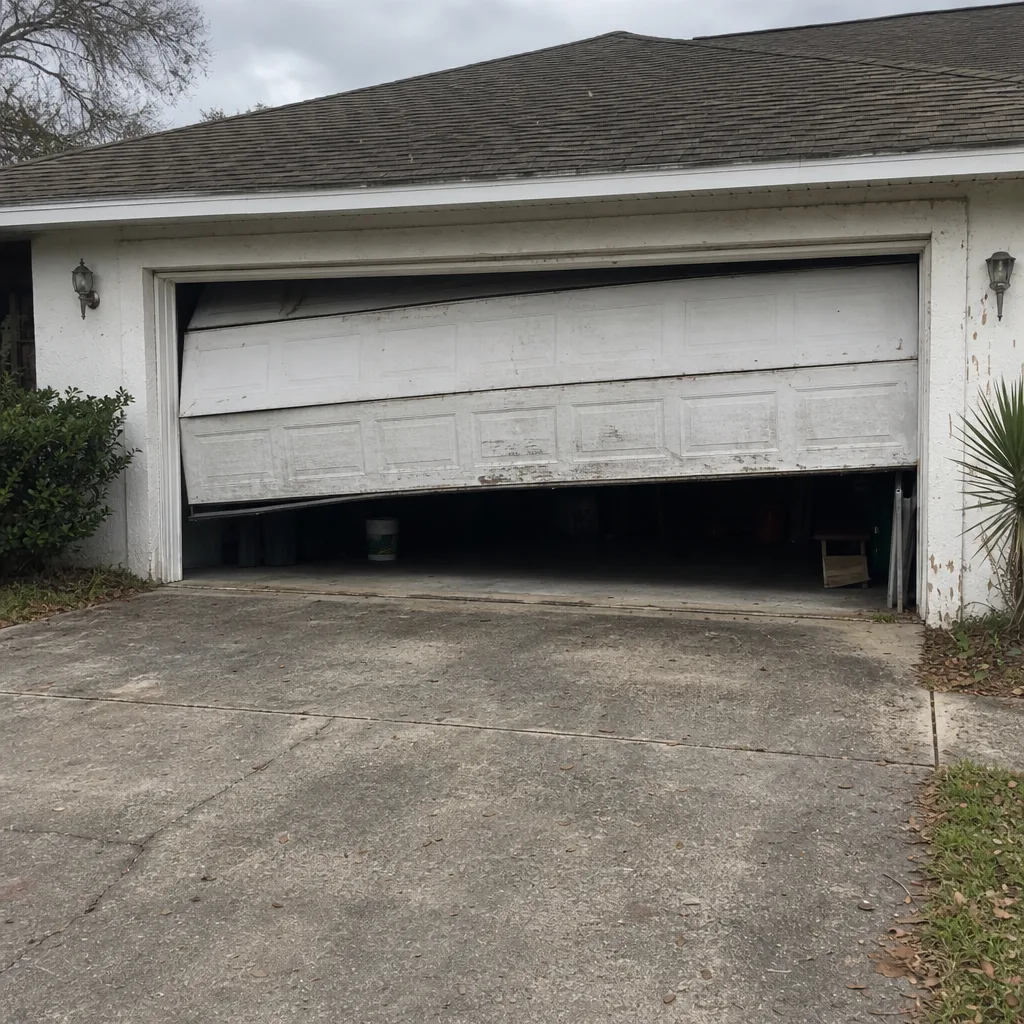 Before
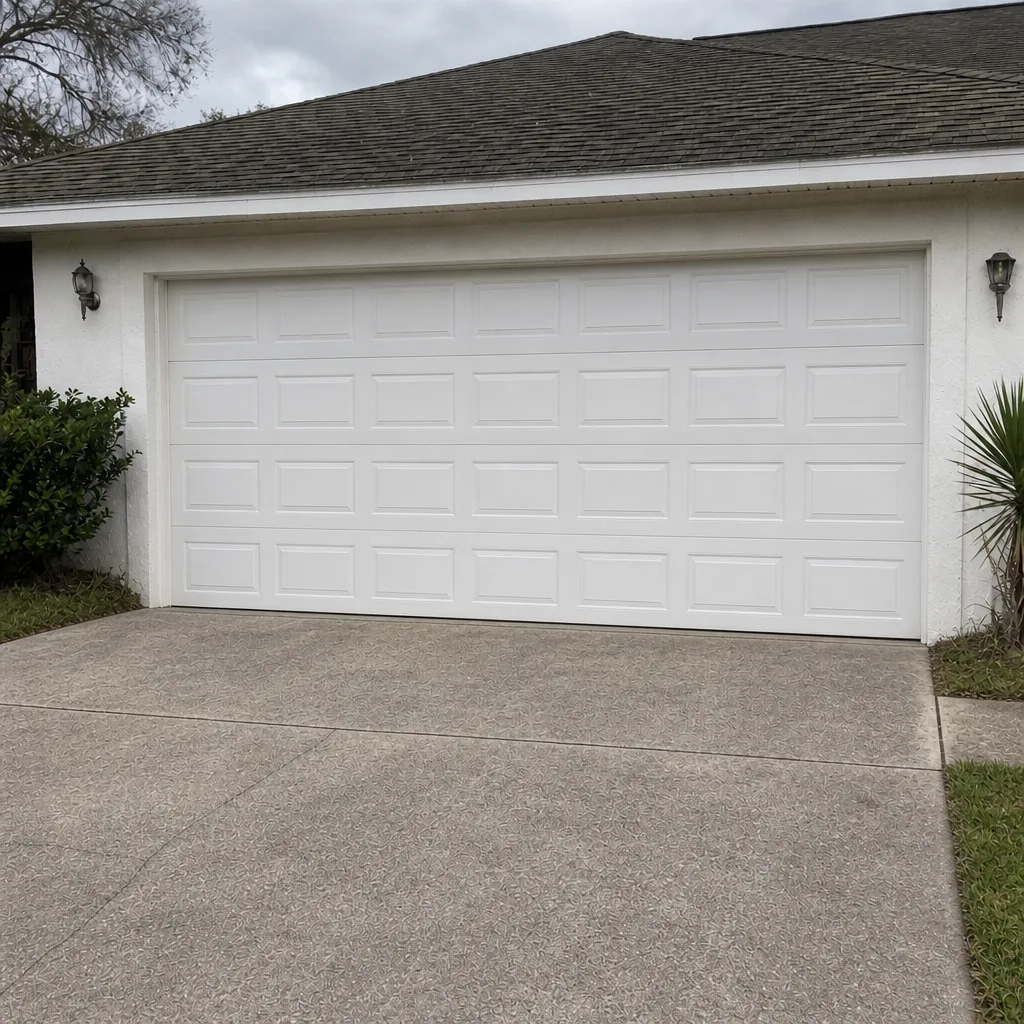 After
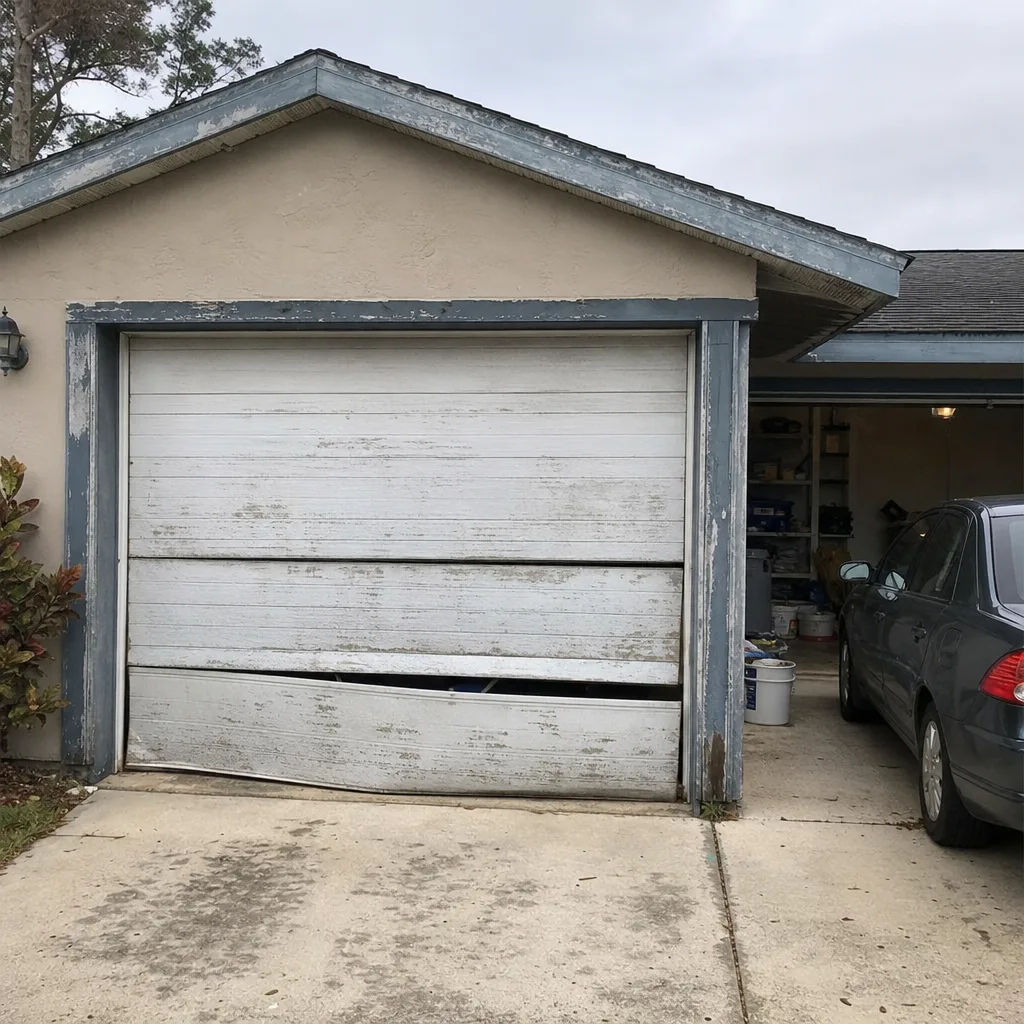 Before
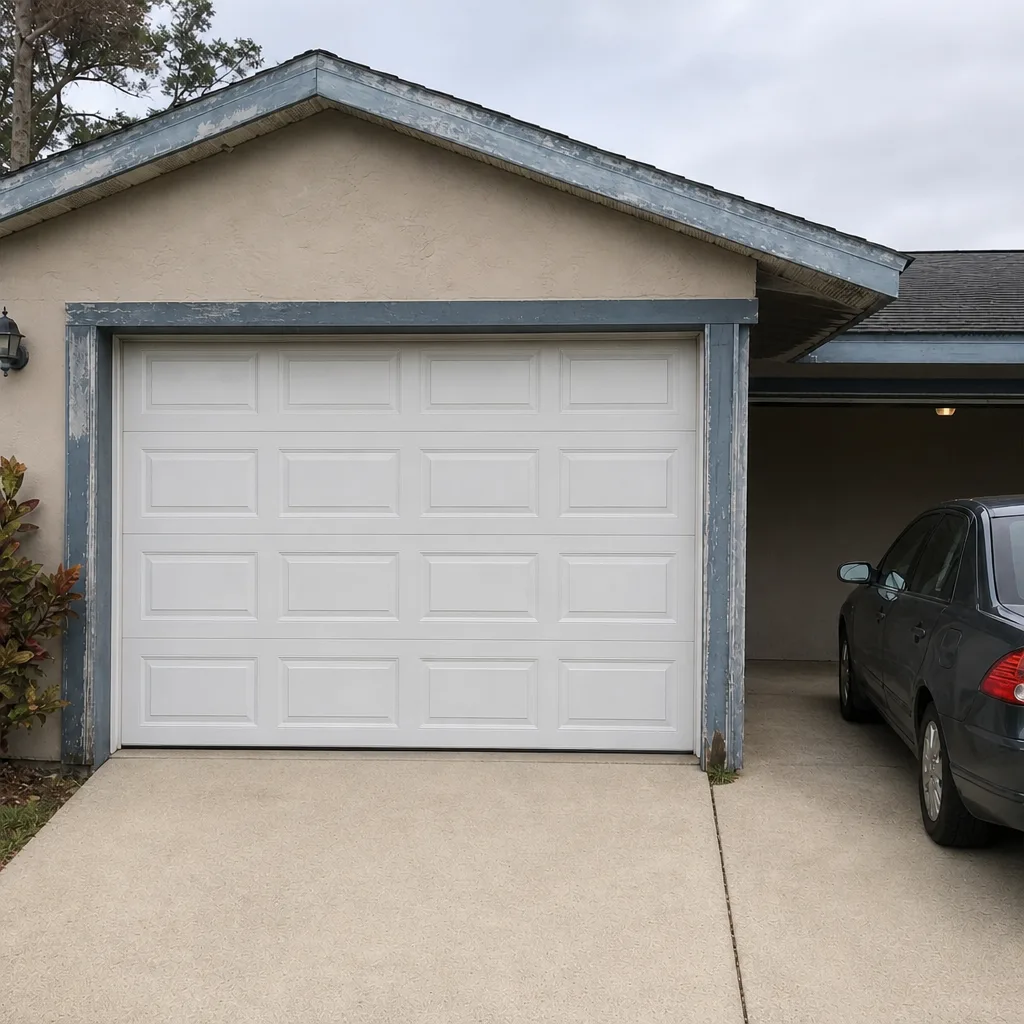 After
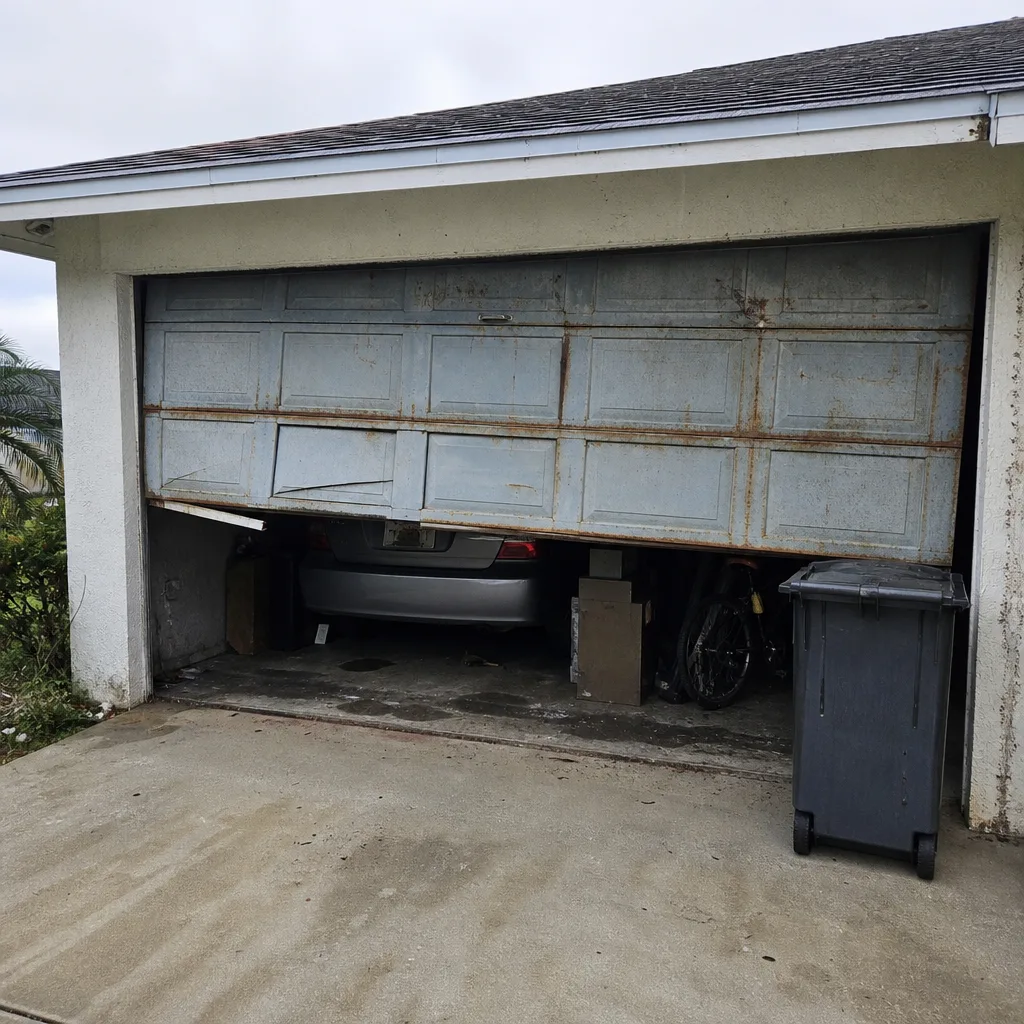 Before
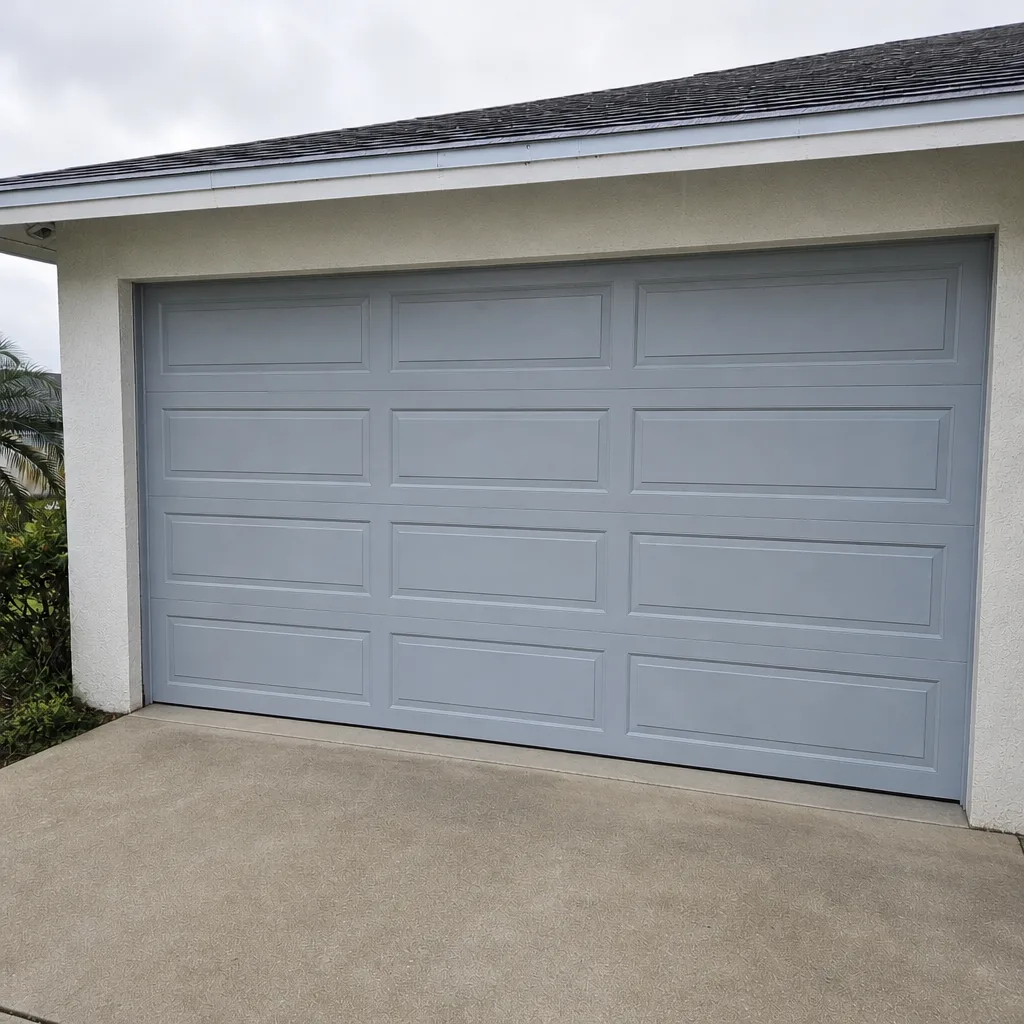 After
When to Call a Professional
Some garage door problems are cosmetic. Others are a genuine reason to pick up the phone and stop using the door. Call a professional when:
- A spring has visibly broken or the door won’t lift more than a few inches by hand
- The door is hanging crookedly, which typically means one spring has failed or one cable has jumped
- The door won’t close or won’t open at all, especially if it’s stuck open
- The door has come off track
- The opener runs but the door doesn’t move, or the door reverses unexpectedly
- A panel has been struck or damaged and the door no longer runs evenly
- The door is more than ten years old and has never been inspected
For an urgent situation like a door stuck open overnight, call rather than watch it. A door that won’t close is a security situation, and the sooner someone looks at it, the shorter that window. We answer 24/7, and a call outside dispatch hours gets booked into the next opening, Sunday through Friday, 7am to 7pm. For routine repair and replacement work, the same line gets you scheduled.
Ormond Beach Garage Door Repair Pros offers free estimates in Ormond Beach – call (855) 645-1112. Our technicians have up to 10 years of experience, and they work on the brand you already have. The estimate is quoted and agreed before any work starts, so you’ll know the number in writing before anything gets touched.
Frequently Asked Questions
Spring repair is priced per job by written estimate, and the final number depends on the door, the spring type and what other parts show wear. A single spring is priced separately from a matched pair, since most doors are repaired with the pair replaced together. Call (855) 645-1112 for an exact quote – estimates are free.
Same-day service is often available for urgent repair. We answer 24/7, and fast dispatch runs from 7am to 7pm, Sunday through Friday. A call outside that window gets booked into the next opening. Call (855) 645-1112 and we’ll find you the soonest slot.
No. The price is quoted and agreed before any work starts, and the written estimate sets the final price. If the inspection reveals additional damage that changes the scope, we stop and re-quote before doing anything, so you decide with the full picture in front of you. Call (855) 645-1112 for a free estimate.
The local pro is licensed and insured as their state requires. Ask for the license number and the certificate of insurance during the quote, and verify the license on the Florida DBPR website before the work begins. That check takes about two minutes and applies to any contractor in Ormond Beach. Call (855) 645-1112 to schedule an estimate.
We service equipment from LiftMaster, Chamberlain, Genie, Clopay, Amarr, Wayne Dalton, Craftsman and Raynor. If you have a name-brand opener or door already installed, the technician will know the system and the parts before arriving. Call (855) 645-1112 with the brand and model if you have it handy.
Yes. Full-cycle capability covers emergency response, garage door repair, opener diagnostics, spring replacement and complete new door installation. That means one call handles whatever stage your door is at. For new installation, expect a free measure and a written price before scheduling. Call (855) 645-1112 to start.
The Bottom Line
Hiring a garage door contractor in Ormond Beach comes down to vetting before you commit: license verified on the DBPR site, real Volusia County presence, a written quote given only after a physical inspection, and a contractor who knows what a Florida Product Approval number is. Filter out the lead brokers early and the rest of the process becomes straightforward. Check the spring handling. Ask for the written scope comparison. Confirm the price is set before work starts. Here in Ormond Beach, the best garage door work comes from a contractor who knows the local climate, handles the brands you already have, and stands behind the job when a spring fails two years later. If you’d like to talk through your situation with someone who handles garage doors and nothing else, we’re ready: Ormond Beach Garage Door Repair Pros, call (855) 645-1112. We answer 24/7, with fast dispatch from 7am to 7pm.
Contact Us for a Free Estimate
Whether the door is stuck, the spring has failed, the opener is struggling, or you’re planning a replacement, we’ll come out, inspect the system, and give you a written price before any work begins. The estimate is free and there’s no obligation to accept it. Our technicians have up to 10 years of experience and service the equipment from the brands you already know. Call (855) 645-1112. We answer 24/7. Fast dispatch from 7am to 7pm, Sunday through Friday, closed Saturday.
Written by the team at Ormond Beach Garage Door Repair Pros.