
Last updated November 22, 2026
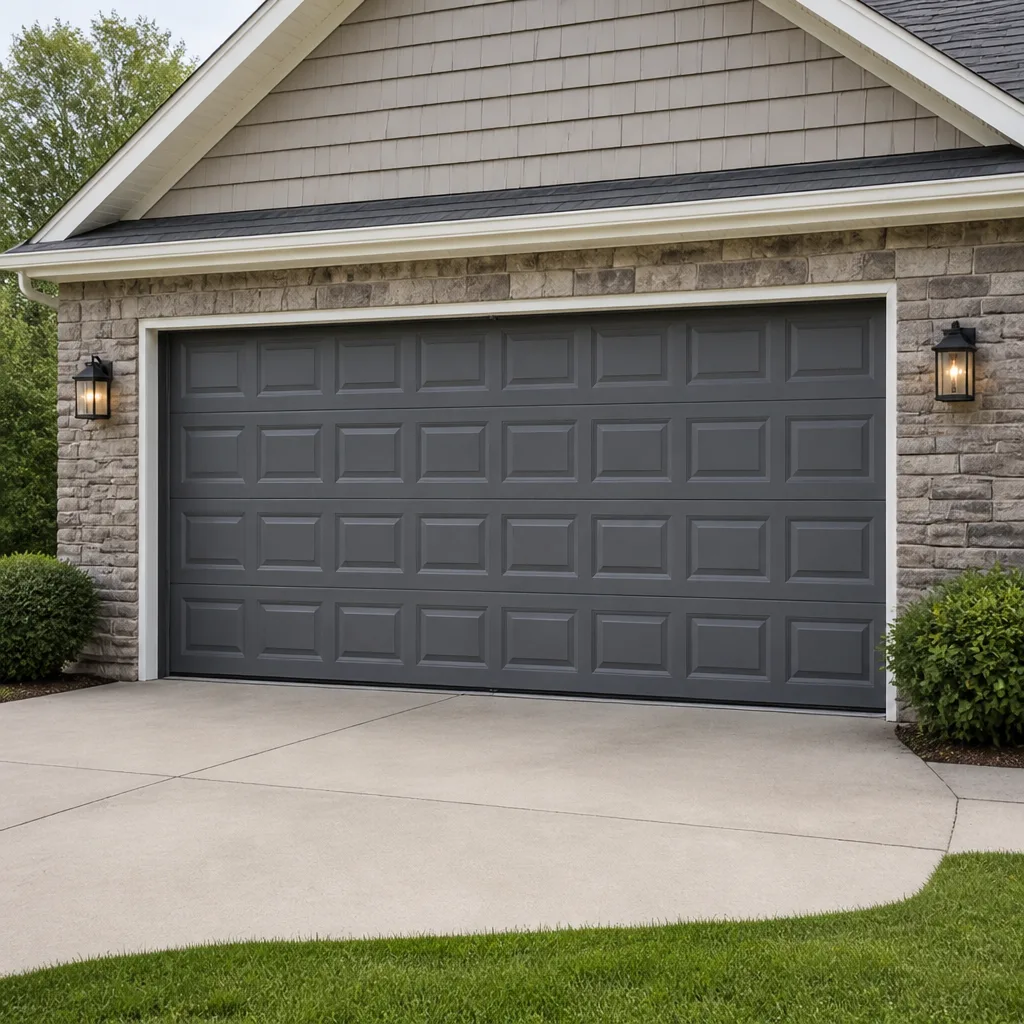 Raised-panel steel
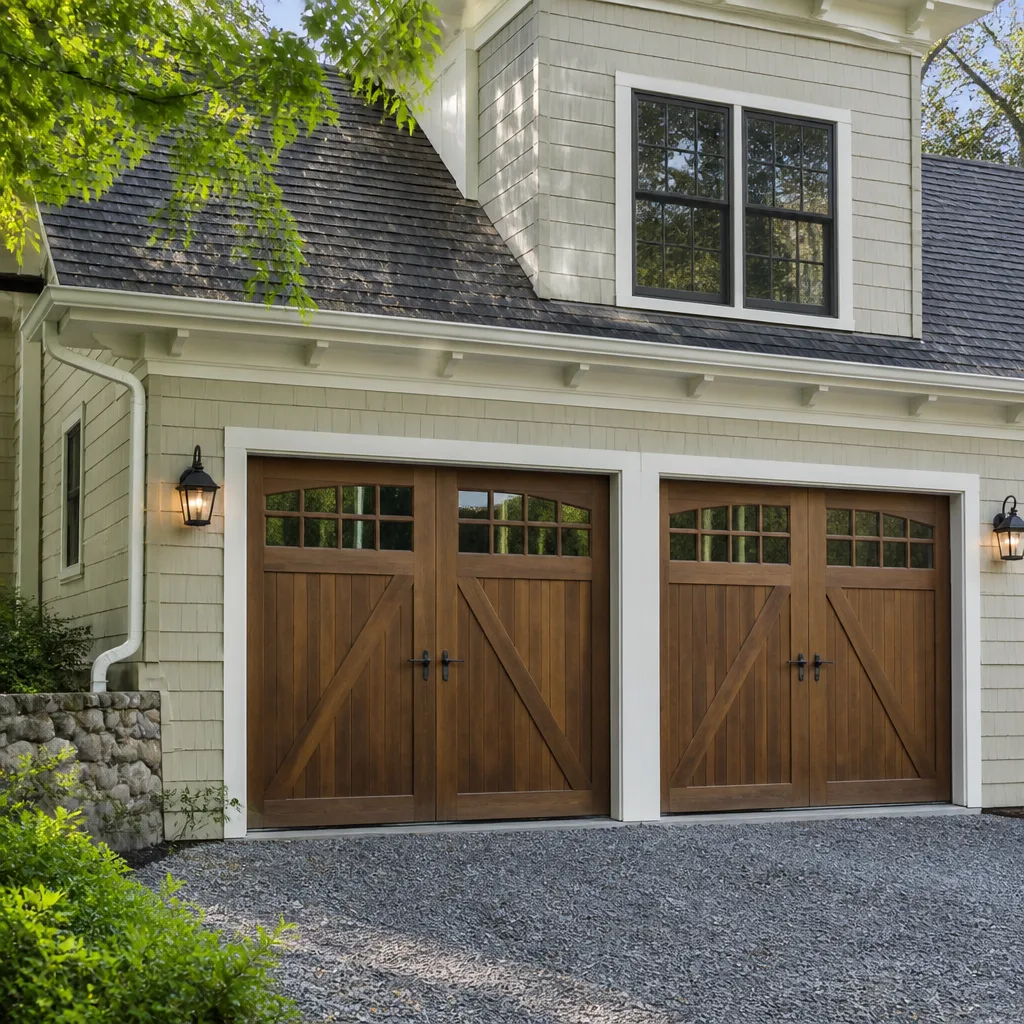 Carriage house
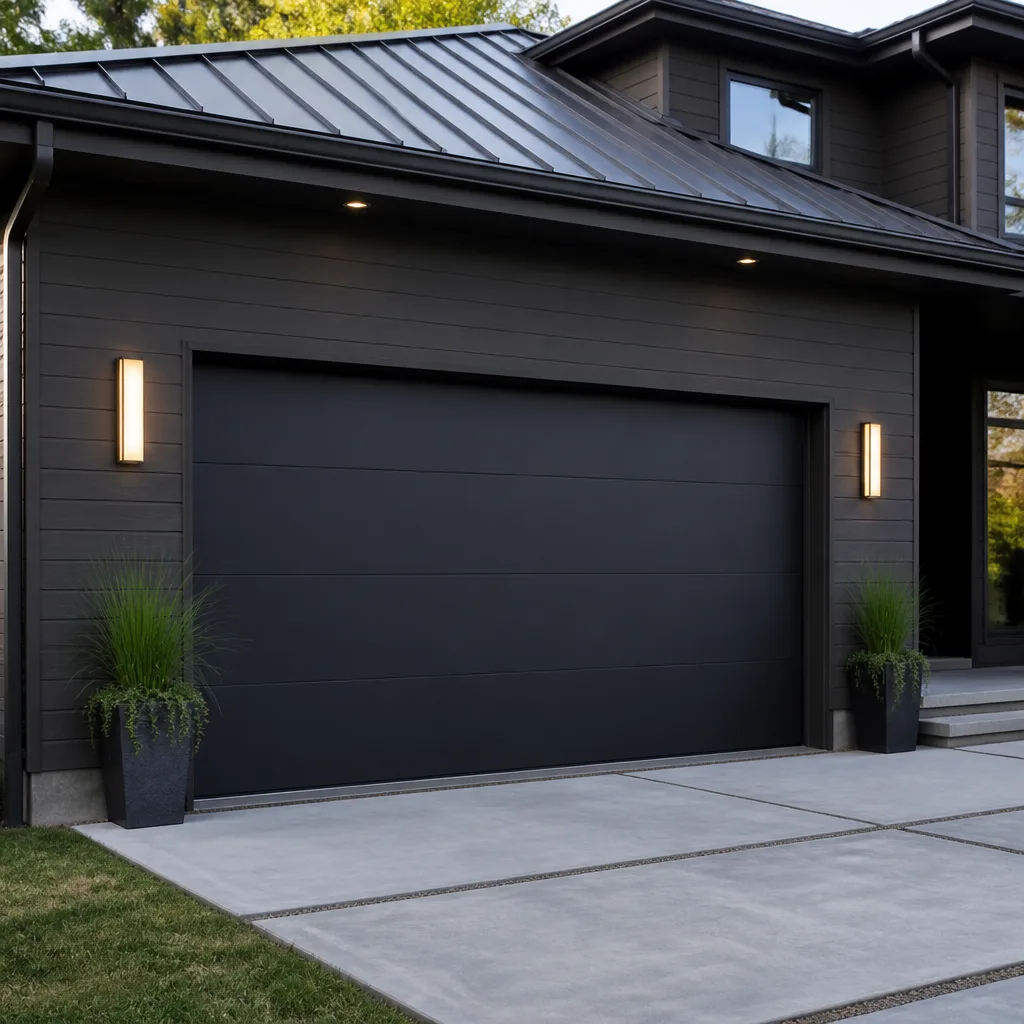 Modern flush
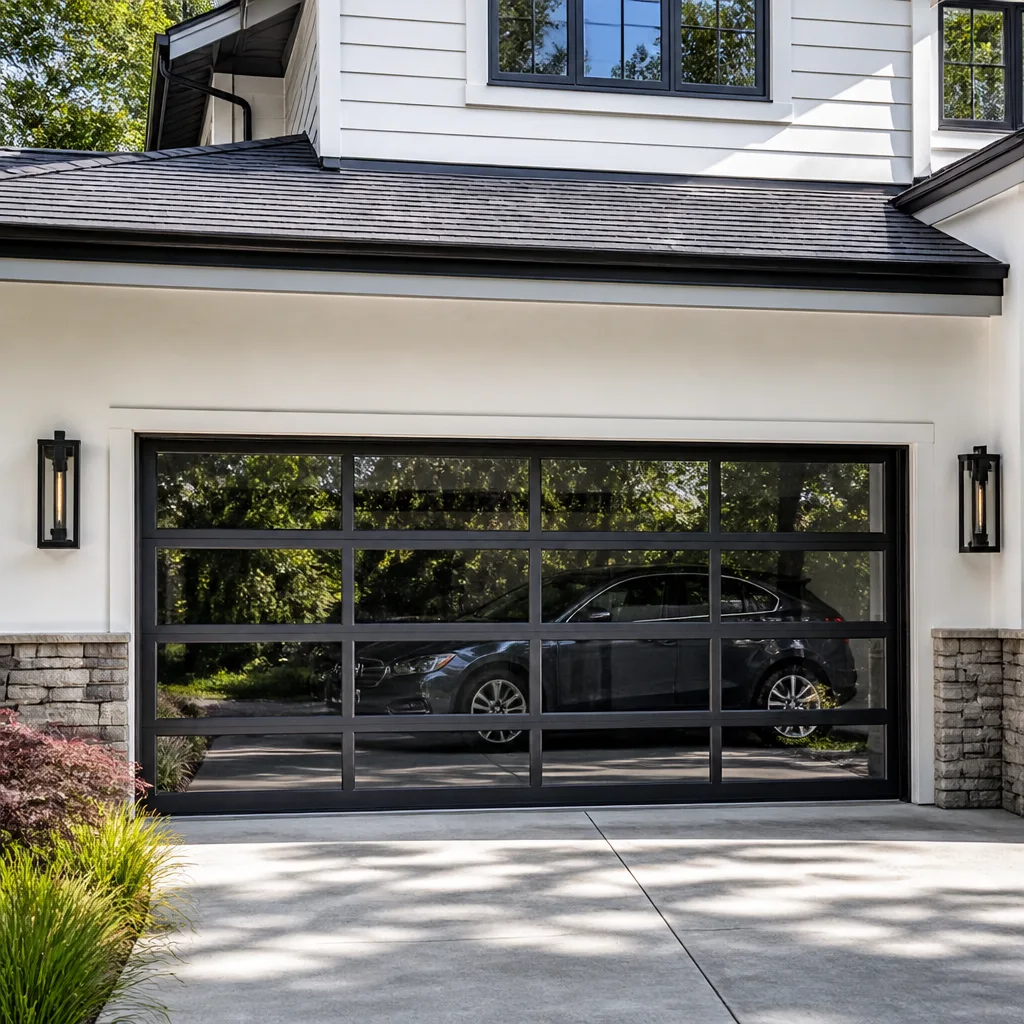 Full-view glass
 LiftMaster openers
 Chamberlain openers
Full 25-point door and opener safety check with every visit - springs, cables, rollers, tracks, and your LiftMaster or Chamberlain opener included
You get a price before we start. It does not change when the pro arrives.
Get your free estimateSeasonal Garage Door Care for Ormond Beach: Year-Round Homeowner’s Guide
Ormond Beach doesn’t get winters that freeze your springs, but June through September will do more damage to your garage door hardware than three northern winters combined if you’re not ready. Most homeowners here grew up with the “tune it up in fall” advice that makes sense in Ohio or Michigan and almost none in Florida. Our seasons run on a different clock: a spring dry stretch that dries out wood, a summer of heat and afternoon rain that finds every weak roller, and a hurricane season that turns a loose bolt into a real problem. What follows is how we think about each of those windows in Ormond Beach, what to check and when, and what genuinely needs a trained technician rather than a Saturday morning with a ladder.
Quick Answer
Garage door care in Ormond Beach should be scheduled around four distinct stress periods rather than traditional four seasons: pre-hurricane prep in May, post-storm inspection through June to November, dry-season checks from November through February, and a summer humidity protocol from June through September. Focus each window on different parts – wind bracing, bottom seals, and manual release before storms; tracks and rollers during the wet months; wood gaps and sensor alignment in the dry stretch; and spring tension once a year in late spring. A yearly spring check before hurricane season is the single highest-value maintenance habit an Ormond Beach homeowner can build.
Styles & brands we work with
- Raised-panel steel
- Carriage house
- Modern flush
- Full-view glass
- LiftMaster openers
- Chamberlain openers
Table of Contents
- Why Ormond Beach Garage Doors Age Differently
- Pre-Hurricane Season Checklist (May)
- Post-Storm Inspection Protocol
- Dry Season (November-February): The Window Most Homeowners Miss
- Summer Humidity Protocol: Tracks, Rollers, and Rust
- Spring Tension Checks and Why Late Spring Is the Right Window
- What to Check Monthly vs. Yearly
- Common Mistakes to Avoid
Why Ormond Beach Garage Doors Age Differently
A garage door in Ormond Beach sees roughly the same annual temperature swing as a door in central Georgia, but it sees far more moisture and far more salt-free humidity than most of the country. The mechanics suffer in specific ways. Steel components handle surface moisture differently than they handle constant humidity. Wood doors move more than dry-climate homeowners expect. Rubber seals harden under UV more than under cold. Every piece of hardware on your door is reacting to the climate around it whether you notice or not.
Here’s the practical part. A garage door is a balance of force. The opener lifts against springs that hold tension every hour of the year, and the springs, cables, and tracks only work when they’re in a narrow band of adjustment. Heat and humidity push the door slightly out of that band. Dry air pulls it back. Most of what we call “seasonal maintenance” is really the yearly cycle of that band drifting and being pulled back into place.
Weather in Ormond Beach also drives how people use their doors. In the summer, doors go up and down more often because the outdoors is uncomfortable and the car is a climate control machine. In the dry months, doors may sit longer between uses, which lets small problems quietly get worse. We work on LiftMaster, Chamberlain, Genie, Clopay, Amarr, Wayne Dalton, Craftsman and Raynor systems, and the seasonal pattern is the same across all of them: whichever part gets used most in a given stretch is the part that decides when the door finally stops cooperating.
One more thing worth naming: hurricane season is June 1 through November 30, and Ormond Beach is squarely inside the Volusia County stretch of the Florida coast that gets watched. Rather than being a general worry, that season should be a real maintenance calendar item with a checklist attached. The rest of this guide is that calendar.
Pre-Hurricane Season Checklist (May)
May is the calmest window of the year for an Ormond Beach garage door – the rain hasn’t fully arrived, the heat is building but not oppressive, and your schedule is probably manageable. That’s exactly why it’s the right time to run the pre-hurricane checklist. Everything you do in May compounds across the next six months. Everything you skip in May becomes a post-storm problem in August.
1. Wind Brace Inspection
A garage door is the largest moving opening on most homes, and in a wind event it’s the weakest. The vertical and horizontal reinforcement on the door panels, along with the brackets holding them, is what keeps the door from bowing. Check the visible brace hardware for loose fasteners, rust, or a bracket that has pulled away from the panel. On brands like Wayne Dalton and Amarr in particular, the specific brace kit for your door model matters, and a brace that’s partially failed is worse than none because it moves under load.
2. Bottom Seal Integrity
Run your hand along the bottom rubber from inside the garage and feel for gaps, cracking, or sections that have pulled away from the aluminum retainer. A failed bottom seal lets water in during a storm and, more importantly, lets wind pressure push under the door. If you can see daylight under any part of the door, the seal is done. Replacing a bottom seal is a straightforward repair that’s much cheaper than the water and pest damage a failed one causes over a season.
3. Manual Release Test
Find the red emergency release handle hanging from the opener trolley. Pull it once with the door fully closed, then lift the door by hand. It should move up smoothly with steady resistance and stay where you leave it. Then re-engage the trolley. If the door won’t move easily or drops when you let go, the springs are compromised and the door needs attention before storm season, not during one. This is also the test to repeat in May of every year, because it tells you more about the overall system than any single visual check.
4. What to Do If the Power Goes Out Mid-Storm
This is the part most homeowners only learn after the fact. If the power fails while the door is down, pull the manual release and lift the door by hand – but only if you’ve done the May test and know the door lifts reasonably easily. If you never tested it and the door feels heavy, don’t force it. If the door is up when the power fails, leave it up until the power returns, then re-engage the trolley and cycle the opener once to reset. LiftMaster and Chamberlain openers in particular can re-engage cleanly with a single cycle after the release is reset. If your opener loses its limits after a storm, that’s a service call, not a homeowner fix.
Post-Storm Inspection Protocol
After a named storm passes through Volusia County, the question isn’t whether the garage door needs inspection – it’s what to inspect, and what’s safe for you to look at versus what genuinely needs a technician. Here’s the split we recommend to Ormond Beach homeowners.
What You Can Check Yourself
- Walk the outside of the door and look for visible dents, panel damage, or anything that’s clearly out of alignment. Note what you see without touching moving parts.
- From inside the garage with the door closed, look for daylight along the sides and bottom. New gaps mean the door has shifted.
- Check the track brackets and the vertical track for obvious bends. A track that’s been knocked out of alignment can force the door to bind.
- Look at the ceiling-mounted opener and trolley for anything visibly displaced. If the trolley or rail has been knocked loose, stop here.
- Check the safety sensors at the bottom of the tracks for debris, mud, or water. Clean the lenses gently with a soft cloth and dry them.
What Requires a Technician
Anything involving spring tension, cable tension, or attempts to force a misaligned door back into the tracks. A garage door spring holds enough energy to cause serious injury if it releases unexpectedly, and a cable that’s started to slip or fray can snap under load. If the door won’t open, feels unusually heavy, hangs crooked, or the opener motor runs but the door doesn’t move, that’s a technician call. Don’t attempt to adjust the springs, cables, or the opener’s force settings yourself.
After major storms, we see two categories of damage. There’s obvious damage, which is inspected and repaired. Then there’s hidden damage, which is a door that still opens and closes but now feels slightly “off” – a small bend in a track, a roller working loose, a spring slightly out of position. That second category is the one that produces failures weeks after the storm has disappeared from the news cycle. A post-storm inspection is cheap next to a post-post-storm breakdown. Our garage door repair team handles that inspection as a routine service, and we’ll tell you honestly whether it’s a repair or just an adjustment.
Year-Round Garage Door Care for Ormond Beach: Month-by-Month Focus
Rather than memorizing every individual check, the simplest way to keep an Ormond Beach garage door in reliable shape is to know what matters most in each stretch of the year. Here’s the calendar we recommend.
- May: Hurricane prep – brace inspection, bottom seal, manual release test, spring check if it wasn’t done in late spring.
- June-August: Post-storm inspection after any named event; track cleaning, roller lubrication, sensor alignment in the high-humidity peak.
- September: Second half of hurricane season – re-run the manual release test, confirm the door seals fully, watch for new track rust.
- October-November: Wind down the wet season – clean tracks thoroughly, inspect rollers, test opener force settings once.
- December-February: Dry season – wood door gaps, sensor drift, weather stripping shrinkage.
- March-April: Pre-season service window – new spring check, door balance test, opener battery replacement, prep for the coming hurricane season.
These months aren’t absolute. If a storm comes through in October, that month becomes a post-storm month no matter what the calendar says. But the template keeps a maintenance habit alive instead of letting things wait until something breaks.
Dry Season (November-February): The Window Most Homeowners Miss
This is the maintenance window almost no one talks about, and it causes some of the most expensive repairs in Ormond Beach. When the humidity drops in late fall and winter, two things happen to your garage door that don’t happen to a door in a wetter climate.
Wood door gaps appear. If you have a wood garage door, and Clopay and Raynor both make popular wood models, the dry air pulls moisture out of the wood panels and they shrink slightly. You’ll see new gaps between boards, sometimes just as thin lines, sometimes as gaps you can slide a fingernail into. Left alone across several dry seasons, those gaps open further, let water and insects in during the wet months, and slowly destroy the panels from the inside. The remedy is to inspect wood doors each December and January, touch up any finish coating where it’s failed, and reset the tension of the door’s balance after the wood has settled for the season. This isn’t a project for a hot July afternoon – it’s a cold, dry, easy one that saves you real money over the years.
Safety sensor drift happens quietly in dry air. The two small sensors at the bottom of your tracks send an infrared beam across the doorway, and they only work when they’re precisely aligned. Dry air and small temperature swings can shift the brackets they’re mounted on by a millimeter or two, which is enough to make the opener hesitate, reverse mid-close, or refuse to close at all. The fix is usually to drop the door’s travel a few inches and re-aim the sensors, which you can see clearly by watching the indicator lights on the sensor bodies while you clean the lenses and adjust them. On Chamberlain and Genie openers in particular, the sensor indicator light tells you immediately whether the beam is being received – if it’s not, that’s your culprit before you assume the opener is failing.
The reason this window gets missed is that doors don’t fail in dry weather. They pass inspection all winter, then fail in June when the humidity returns. If you want a rule: check your door once in January, before you’ve forgotten everything you noticed in the fall.
Summer Humidity Protocol: Tracks, Rollers, and Rust
From June through September, Ormond Beach sits in the most demanding stretch of the year for garage door hardware. Hot, humid air condenses on metal surfaces overnight, dries during the day, and repeats. This cycle is what eventually produces track rust, roller corrosion, and the sticky, reluctant motion that feels like the opener is struggling.
The Right Lubrication Routine
The instinct when a door feels stiff is to add more lubricant. On a Florida garage door, the smarter move is less lubricant, applied more precisely. Too much grease or spray attracts dust, forms a paste with it, and the paste does more damage than the dry metal ever did. Here’s what we recommend:
- Clean the tracks thoroughly with a dry cloth before adding anything – most track problems are dirt, not friction.
- Lubricate rollers, hinges, and the torsion bar bearings, not the tracks themselves. Track surfaces should stay clean and dry.
- Use a small amount. A few drops per roller is enough; a spray can with a directed nozzle is better than a general aerosol.
- Wipe off excess lubricant before it has a chance to collect dust.
- Check the rollers for corrosion by feel – a roller that drags or is visibly rough looking is due for replacement, not extra grease.
Track Rust and Roller Corrosion
The steel tracks on a garage door are the rails the rollers travel on. Once rust starts, it changes the shape of the rail surface slightly, which makes the rollers wear faster, which produces more vibration, which works the roller brackets loose. The cycle is slow but real. Check the inside running surface of the vertical tracks once a month in summer and wipe away any rust bloom early. If the tracks have visible pitting, they’re past the point of cleaning and should be replaced – it’s a straightforward job for our garage door repair team, and trying to sand down pitted tracks only makes the rollers wear faster.
Opener Performance in the Heat
Openers run warmer in the summer because the motor has to work harder against a door that’s slightly heavier when it’s humid and the metal has expanded. If the opener’s force settings are at their limit, a hot afternoon can push it over. LiftMaster and Chamberlain openers have overload protection, so a straining motor will trip and refuse to run rather than burn out – but it will do this intermittently, which is frustrating if you don’t know why. If your opener is hesitating on hot afternoons, that’s a sign the door’s balance and force settings need a look, not a sign you need a new opener.
If the door itself becomes reluctant to move on its own, before assuming the opener is the problem, our garage door opener repair team can tell you in one visit whether it’s the motor, the sensors, or the door’s mechanical balance.
Spring Tension Checks and Why Late Spring Is the Right Window
For an Ormond Beach homeowner, the best single maintenance habit is to have spring tension checked once a year in late spring, before hurricane season begins. The reasoning is practical rather than decorative. Torsion and extension springs hold the weight of the door whether it’s moving or not; they’re under tension 24 hours a day, every day. The cycle counting is the same regardless of climate, but the wear is not – a spring that’s been cycled through a full humid summer has been worked harder than one that hasn’t. Checking tension in April or May gives you a clean starting point for the half of the year when the door takes the most punishment.
Why We Recommend a Spring Check, Not a Spring Replacement
A yearly tension check is cheap and non-invasive. If the springs are still in spec, you get peace of mind and no bill. If they’re starting to stretch or the door is drifting when it’s half open, you get months of warning before a spring fails completely. A spring that fails outright in July typically means a call for emergency service, the door is stuck, and the car is trapped inside. A spring that gets replaced in May on a scheduled visit is a much less stressful event. Our garage door spring repair work is the technical core of what we do, and the difference between a scheduled replacement and an emergency replacement is mostly calendar discipline.
What Homeowners Should and Should Not Do Themselves
Checking how your door balances is safe. With the door closed and the opener disconnected via the red release, lift the door halfway and let go. A properly balanced door will stay roughly where you leave it. A door that slams down or won’t lift is describing a spring problem you need to hand off. What is not safe is adjusting any spring tension, unhooking a torsion spring, or trying to reposition a cable. Springs hold dangerous stored energy, and there is no upside to touching them without the right tools and training. If you suspect a spring problem, stop using the door and call for a service visit.
What to Check Monthly vs. Yearly
A monthly check takes ten minutes and catches most of the small problems before they become expensive ones. A yearly check is where the technician handles anything you can’t see or shouldn’t touch. Here’s the split.
Monthly (Homeowner)
- Test the door balance with the manual release, then re-engage.
- Clean and test the safety sensors by placing a hand or box in the beam – the door should reverse.
- Wipe dust from the tracks and look for rust spots.
- Listen for new noises – grinding, squealing, popping. New sounds tend to announce bigger problems.
- Visual check of seals along the bottom and sides for obvious damage.
Yearly (Technician Recommended)
- Full spring tension inspection and adjustment.
- Cable inspection for fraying or slack.
- Roller and hinge replacement as needed.
- Opener force and limit calibration.
- Track alignment check for bent or worn rails.
- Weather seal replacement if the bottom or sides are no longer sealing.
If you’d rather not climb a ladder at all, the yearly visit can be the only one you schedule – the technician will naturally surface anything that a monthly check would have caught, just later. The monthly check is for homeowners who like the small ritual of knowing their door.
Common Mistakes to Avoid
- Over-lubricating the tracks. Grease on the running surface of the tracks attracts dust, which turns into grit, which accelerates roller wear. Tracks should be clean and dry; rollers and hinges get the lubricant.
- Skipping the dry-season check because the door “feels fine.” Dry season problems – wood door gaps and safety sensor drift – don’t cause failures in the winter. They cause failures in June. Check in January.
- Treating the yearly spring check as optional. Springs are under tension every hour of the year, and the only way to know they’re in spec is to test them. Skipping this test for two years is how a scheduled spring repair turns into an emergency one.
- Ignoring the manual release until a storm. If you’ve never tested the red release handle and you need it in a power outage, it may not let go, or the door may be too heavy to lift when you release it. Test it every May.
- Adjusting the opener’s force setting to compensate for a stiff door. Raising the force setting temporarily fixes the symptom and hides the real problem – a spring, roller, or track issue. The right move is to find and repair the cause.
- Leaving storm damage for later. A bent track or loose bracket after a named storm can look fine for weeks, but the underlying stress is working every time the door opens. Have it inspected before the next storm arrives.
- Assuming a hurricane brace kit doesn’t need checking. Braces loosen, fasteners rust, brackets pull away. On door models from Wayne Dalton, Amarr, and Raynor, a brace kit that’s partially failed can be worse than none because it moves under load.
See the difference
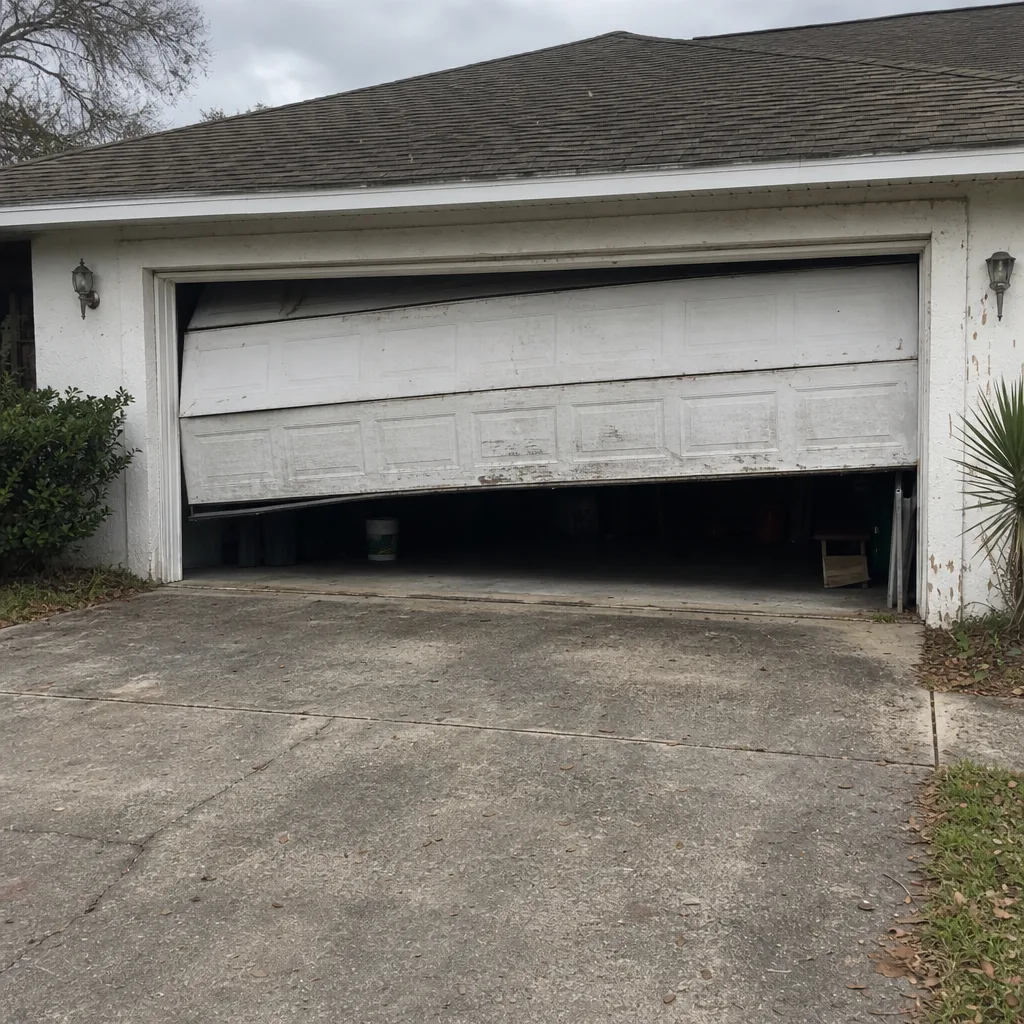 Before
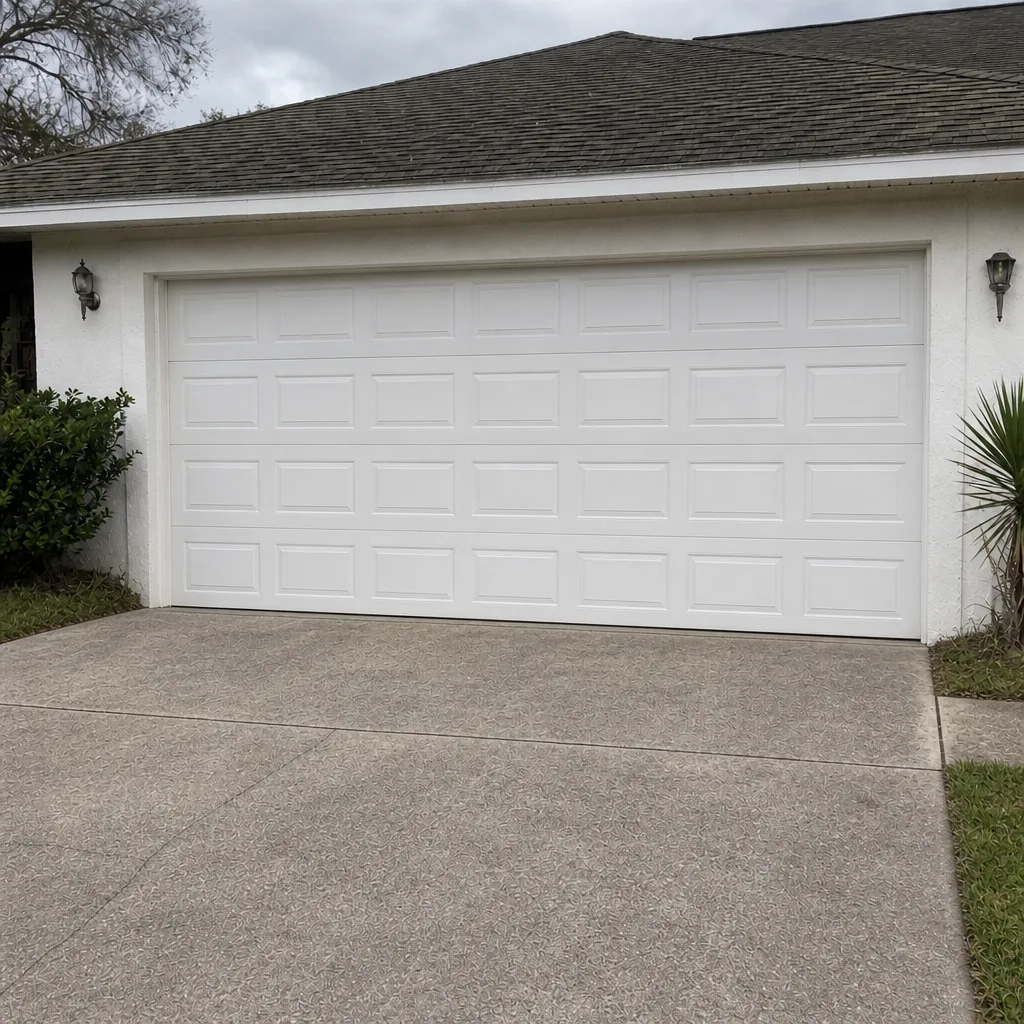 After
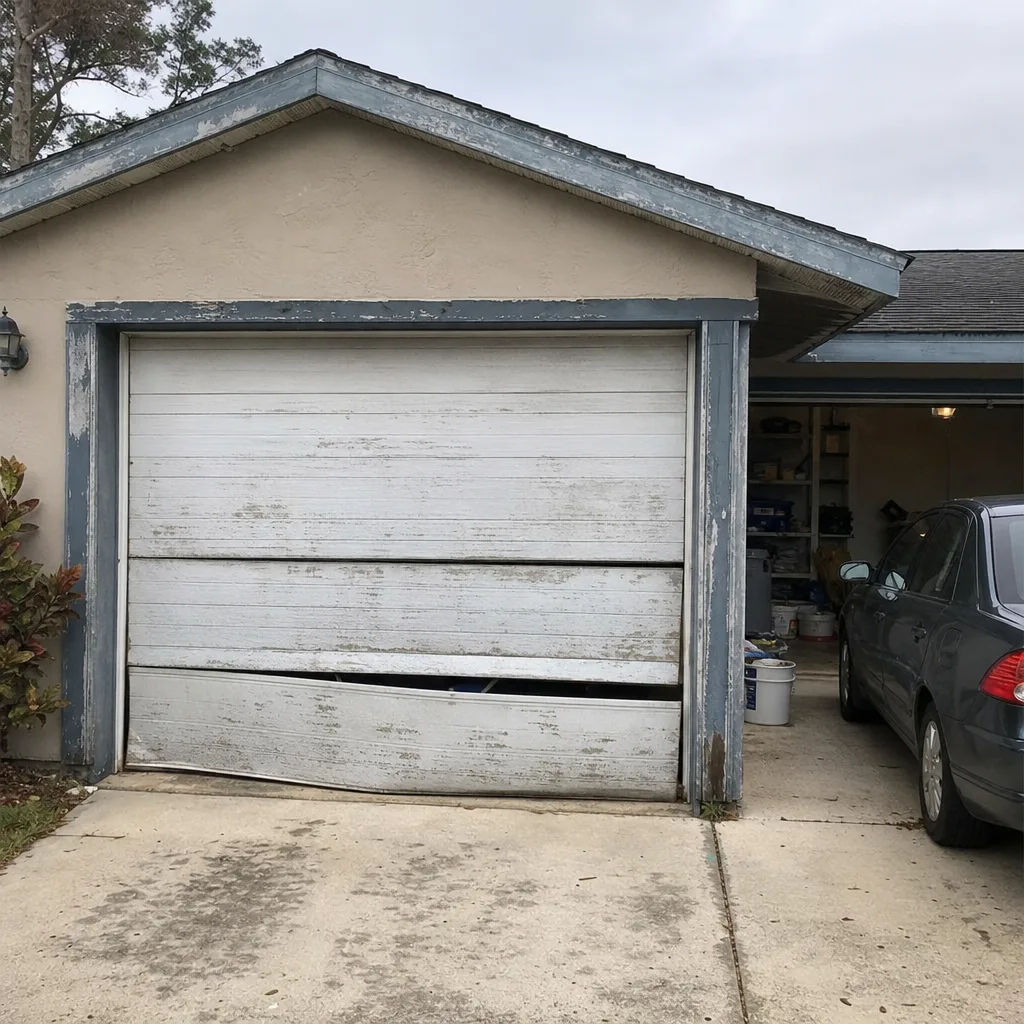 Before
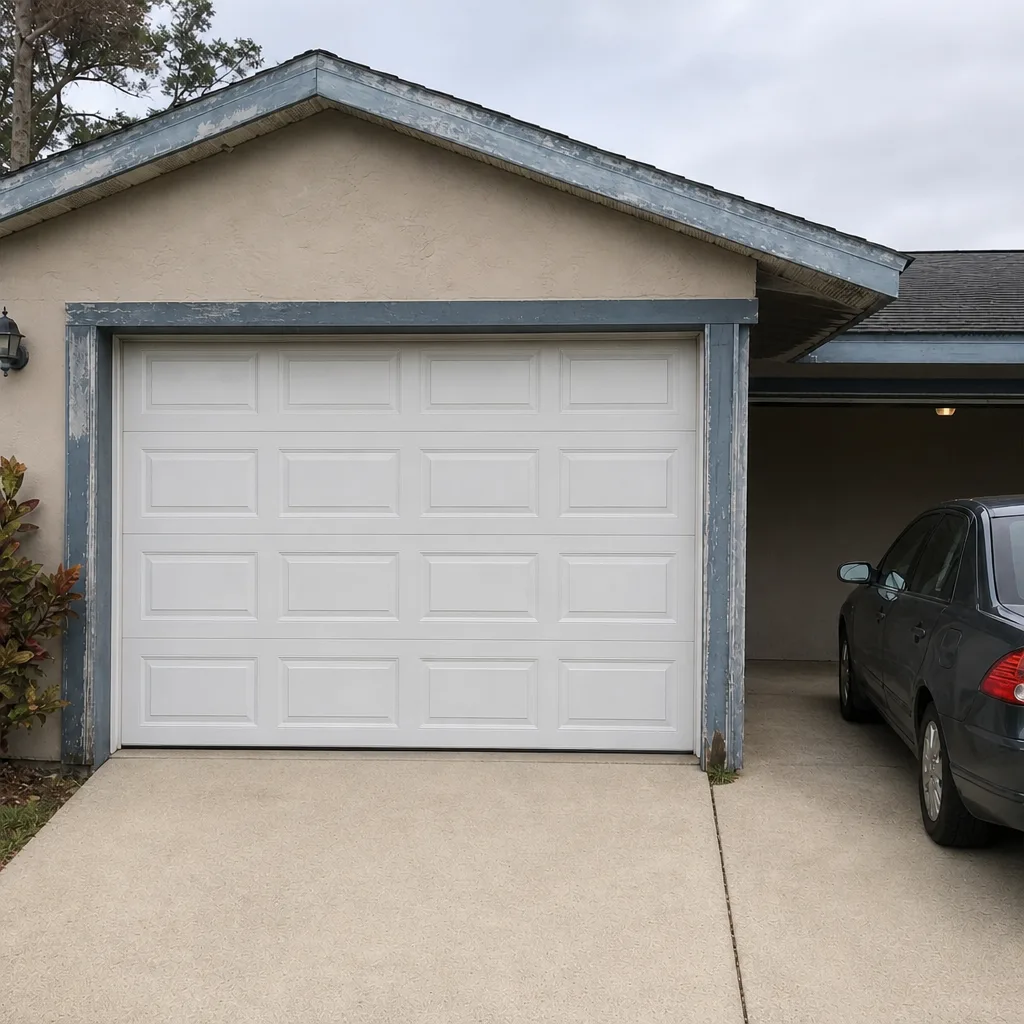 After
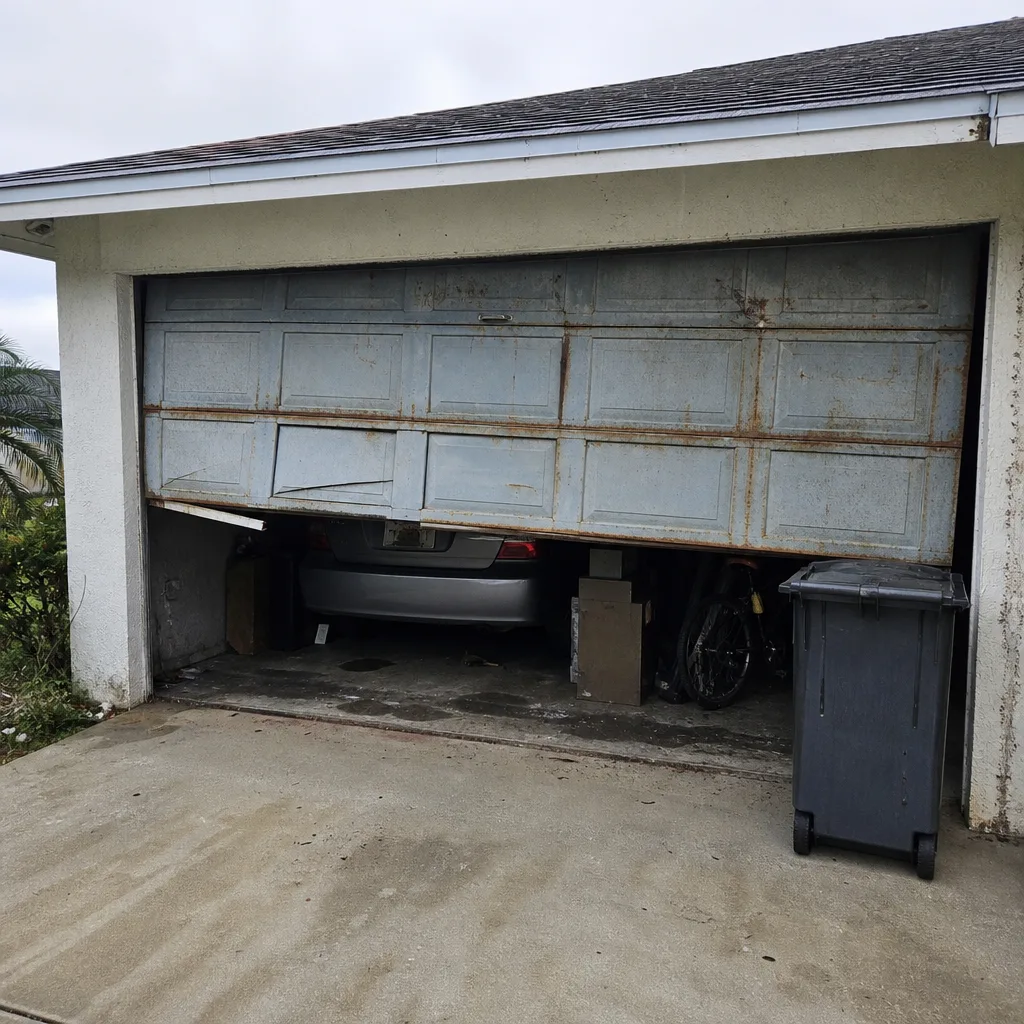 Before
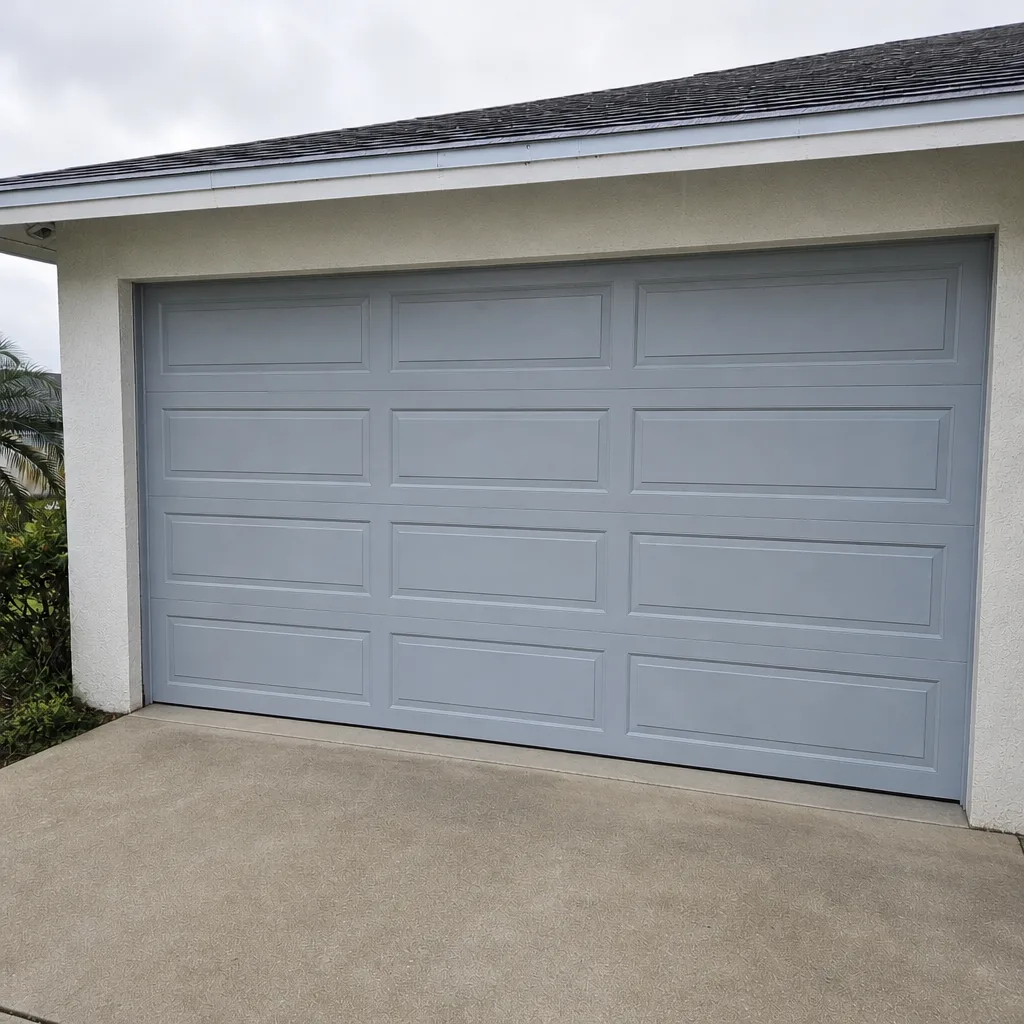 After
When to Call a Professional
Some garage door problems are homeowner fixes and some are not. Anything involving spring tension, cable tension, or the opener’s internal settings needs a trained technician. So does any door that’s visibly out of alignment after a storm, any door that won’t close fully under its own power, any opener that runs but doesn’t move the door, and any door that’s been run into by a car or struck by something heavy. These aren’t cases where DIY saves money – they’re cases where the wrong move makes the problem worse or risks injury. Our garage door spring repair work in particular is the sort of technical job where you want a specialist, not a generalist.
Ormond Beach Garage Door Repair Pros offers free estimates in Ormond Beach. We handle repair, opener service, spring work, and new installation, and we service the brand of door and opener you already have. Call (855) 645-1112 to book a visit. We answer 24/7, and fast dispatch from 7am to 7pm Sunday through Friday gets a technician out quickly for urgent problems. A call outside dispatch hours is booked into the next opening, Sunday through Friday, 7am to 7pm. The price is quoted and agreed before any work starts.
Frequently Asked Questions
Late spring, around April or May, is the best window for an Ormond Beach garage door because it gives you a clean starting point for hurricane season. A spring tension check and full inspection done before June means any developing problems get fixed while the schedule is open, rather than during a storm recovery period. A second, shorter service visit in October cleans up the door after the wet season.
Yes, mostly because the stress comes from humidity, salt-free moisture, and hurricane-season wind rather than freezing temperatures. A northern door deals with freeze-thaw cycles and cold brittleness in rubber components. A central Florida door deals with year-round UV, high humidity, summer heat expansion, and the possibility of a named storm coming through. Spring tension checks are similar in both places; the seasonal cleaning, lubrication, and seal inspection schedules are not.
Lubricate the rollers, hinges, and torsion bar bearings roughly every three to six months, but not the tracks themselves. Tracks should be wiped clean and kept dry; grease on the track surface attracts dust and causes more wear than it prevents. Roller and hinge lubrication is the maintenance that actually reduces friction and noise.
A garage door that won’t lift easily by hand, drops when you let it go halfway up, or feels unusually heavy at the start of a lift cycle is describing a spring problem. Visible gaps in a torsion spring, a stretched extension spring, or an opener that runs but doesn’t raise the door are all signs. Have them checked by a technician – spring tension is not safe to adjust yourself.
After a storm in Volusia County, check for visible panel damage, daylight along the bottom and sides of the door, bent tracks, displaced opener hardware, and debris on the safety sensors. Anything involving the springs, cables, or a door that now hangs crooked needs a technician. A door that still opens and closes but feels off is worth an inspection before the next storm season.
Yes, if the manual release has been tested and the door is not too heavy for you to lift. The red release handle disconnects the opener trolley so the door can be operated by hand. Before relying on it during a storm, test the release in a low-stress moment in May or June and confirm you can raise and lower the door. If the door feels heavy or drops, have it serviced before hurricane season.
Often yes, depending on how the seal is attached. Many common seals slide out of an aluminum retainer once the old one is pulled free, and a replacement slides back in. Sections that are glued or that have pulled away from the retainer can be trickier. If the bottom seal has been allowed to fail for several seasons, the underlying door panel may also have taken on water damage, and that’s worth a technician’s look.
The Bottom Line
Garage door maintenance in Ormond Beach is a calendar, not a crisis. Schedule the pre-hurricane inspection in May, run the post-storm checks after any named event, don’t skip the dry-season window in December and January when wood gaps and sensor drift quietly appear, and keep the summer humidity routine simple – clean tracks, lubricate the right parts, don’t over-grease. The once-a-year spring tension check in late spring is the highest-value habit because it prevents the emergency spring replacement everyone wants to avoid. Small habits spread across the year produce a door that works reliably through the whole of it.
If you’d rather hand the calendar to someone who works on garage doors every day, or if something on your door has already crossed from “worth watching” to “worth fixing,” call Ormond Beach Garage Door Repair Pros at (855) 645-1112 for a free estimate. We answer 24/7, fast dispatch from 7am to 7pm Sunday through Friday, and we work on the brand you already have – LiftMaster, Chamberlain, Genie, Clopay, Amarr, Wayne Dalton, Craftsman, or Raynor. One call from broken to back to normal. Visit Ormond Beach Garage Door Repair Pros for the full picture of what we offer.
Written by the team at Ormond Beach Garage Door Repair Pros.